
Tennis stands as more than a match between two rackets and a yellow ball. It carries centuries of evolution, discipline, and tradition. It blends aristocratic roots with modern global spectacle, while preserving a scoring system that often puzzles first time viewers. Yet that unusual structure forms part of the sport’s identity, shaping its rhythm, tension, and character in ways that set it apart from other major sports.

Tennis traces its origins to medieval France, where players struck a ball with their bare hands in a game known as jeu de paume, meaning game of the palm. Over time, players introduced rackets and moved the game indoors under the name real tennis, which followed slightly different rules from the modern version.
The major transformation occurred in nineteenth century Britain, where players adapted the game to grass courts and introduced the term lawn tennis. Organizers established clearer rules and standardized rectangular courts, creating the foundation of the sport seen today. The launch of Wimbledon in the 1870s marked a defining milestone, turning tennis into a structured competitive sport.
As the twentieth century progressed, the sport expanded to the United States, Australia, and across Europe. The introduction of the Open Era, allowing professionals and amateurs to compete together, elevated tennis into a global industry. Major tournaments began attracting millions of viewers, while players emerged as international icons. What once belonged to elite circles transformed into a worldwide sport defined by prestige and competition.
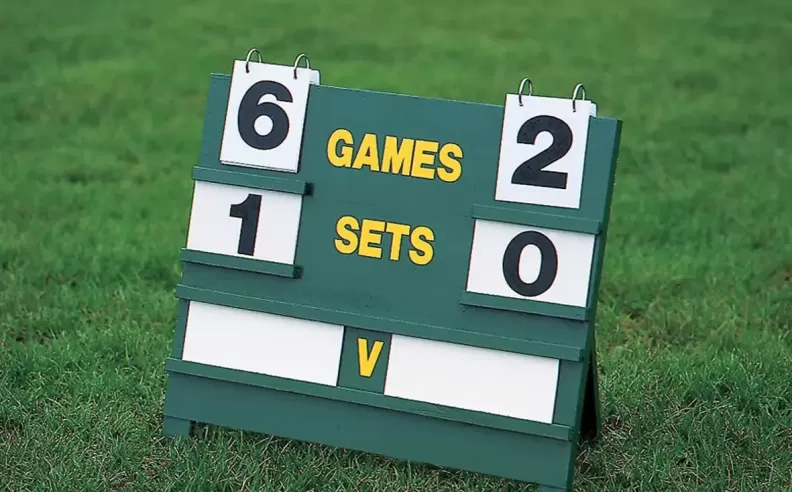
Observers often question why tennis scores move from love to 15, 30, and 40 instead of 1, 2, and 3. Historians trace the sequence to early traditions, though no single explanation dominates. What remains certain is that the system became embedded in the sport’s DNA.
Within a single game, a player must win four points and lead by two to secure victory. When the score reaches 40 40, players enter deuce, where psychological pressure intensifies. Winning the next point grants advantage, while capturing the following point closes the game. Losing it resets the score back to deuce, sometimes multiple times within one game.
This structure injects drama into every rally. Even a leading player can see momentum shift after two quick points. Tennis therefore tests mental strength as much as technical skill. Each exchange carries weight, and every point feels capable of changing the outcome.

Tennis constructs its matches layer by layer. Points form games, games build sets, and sets determine the match. A player typically wins a set by reaching six games with a two game margin. If the score reaches 6 6, most tournaments introduce a tiebreak to prevent endless extensions.
Most tournaments follow a best of three sets format, while men’s matches in Grand Slam events may extend to five sets. Such structure explains why certain matches stretch for hours. Players must balance stamina, strategy, and mental focus throughout each phase.
Ultimately, tennis thrives on momentum and discipline. Each point stands alone, yet together they shape the path to victory. That layered intensity explains why the sport continues to command respect and prestige worldwide, from historic grass courts to the brightest Grand Slam stages.

Started my career in Automotive Journalism in 2015. Even though I'm a pharmacist, hanging around cars all the time has created a passion for the automotive industry since day 1.






 SHARE
SHARE