As summer approaches in the GCC, destinations across the region are encouraging residents to explore closer to home through a growing calendar of local and regional campaigns. From Saudi Arabia’s “Summer Our Way” and Qatar’s “Hala Summer” to Bahrain’s GCC-focused family tourism season and the UAE’s “Make it a Dubai Summer”, regional travel is placing renewed focus on the road journeys connecting cities, coastlines, mountain routes and inland destinations.
For petrolheads, this shift makes the question of real-world engine performance more relevant. Longer road journeys, sustained highway speeds, overtaking from cruising pace and climbs into cooler mountainous areas all place emphasis on the way an engine delivers torque in the low- and mid-range. In these conditions, performance goes beyond horsepower alone.
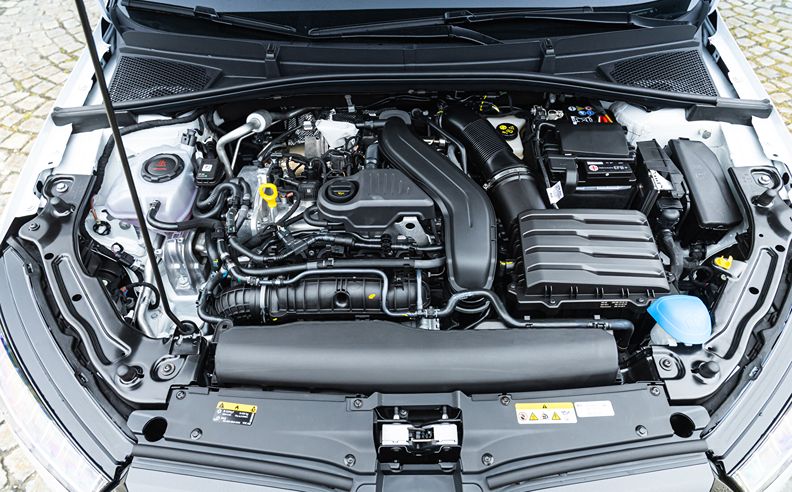
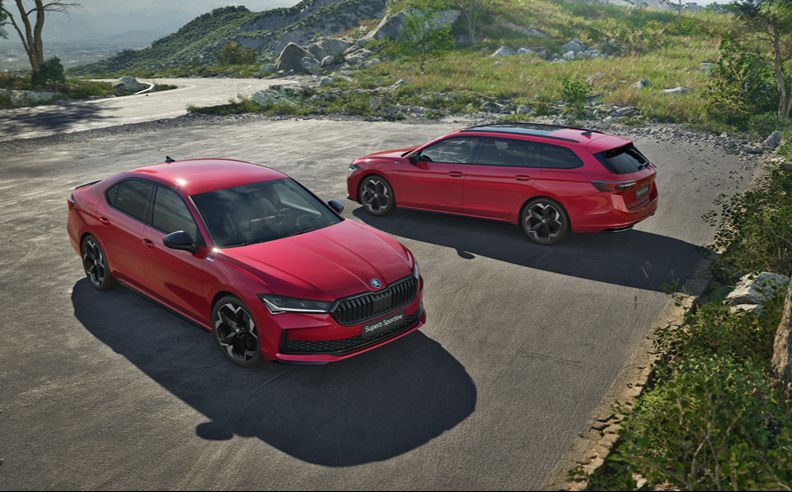
Škoda’s TSI engine technology is designed around this operating range. By combining turbocharging with direct fuel injection, TSI engines deliver strong pulling power from low engine speeds, often from around 1,500 rpm, and maintain it across the mid-range where most everyday driving takes place. The result is smooth acceleration, fewer unnecessary downshifts and a more relaxed driving character without relying on larger displacement.
Torque delivery: where real-world performance begins
Škoda TSI engines are tuned to build torque early and hold it through a wide mid-range plateau, typically from around 1,500 rpm to 3,500-4,000 rpm. This gives the engine flexibility in the part of the rev range drivers use most often, rather than requiring high revs to access performance.
This is particularly relevant on longer summer routes, where drivers may need smooth roll-on acceleration from cruising speed, confident overtaking on highways or steady momentum on inclines. The broad torque band allows the engine to respond smoothly to throttle input, supporting relaxed motorway driving and fewer unnecessary downshifts.
Turbocharging: smaller engine, stronger response
The core principle behind TSI is downsizing: extracting strong performance and efficiency from a smaller, lighter engine. Instead of depending on displacement alone, the turbocharger uses exhaust energy to force more air into the engine, helping it generate more torque when required.
This allows a compact engine to deliver the response drivers might traditionally associate with a larger naturally aspirated engine. For everyday driving, the benefit is clear: stronger pull at lower engine speeds, smoother acceleration and less need for the gearbox to downshift.
The specific output comparison underlines the engineering progress. A naturally aspirated 1.0-litre petrol engine from the early 2000s would typically produce around 50–60 HP. Škoda’s 1.0-litre TSI produces 115 HP from the same displacement, while remaining lighter, cleaner and more efficient.
For GCC drivers travelling between cities, coastal routes or higher-altitude destinations, this means the engine can deliver useful response without relying on larger displacement alone.
Direct fuel injection: precision that supports performance
Direct fuel injection is the second key part of the TSI concept. Fuel is injected directly into the combustion chamber at pressures of up to 350 bar, compared with around 3-5 bar in traditional port-injection systems.
This high-pressure injection creates a fine fuel mist, allowing the engine to burn fuel more evenly and efficiently. The system also adjusts fuel timing and quantity in real time, based on throttle demand, load and temperature.
For the driver, this supports sharper response when accelerating and more predictable power delivery under load. For the engine, it supports cleaner combustion and helps manage temperatures when the turbocharger is producing boost.
Engine architecture: the details behind the response
Beyond turbocharging and direct injection, TSI engines use supporting technologies that improve real-world performance and efficiency. An integrated exhaust manifold reduces the distance exhaust gases travel to the turbocharger, helping the turbo respond more quickly at lower engine speeds.
Variable valve timing on the intake and exhaust camshafts also helps the engine adapt to different conditions. At lighter loads, it can improve efficiency by reducing pumping losses. Under stronger acceleration, it supports airflow and combustion efficiency.
These details are rarely visible to the driver, but they shape how the engine feels: responsive at low speeds, smooth through the mid-range and composed during sustained cruising.
Efficiency beyond engine size
TSI’s efficiency is not simply the result of using a smaller engine. It comes from how the engine operates across a typical drive cycle. Reduced displacement lowers mass and internal friction. Turbocharging supplies additional air only when stronger performance is required. Direct injection delivers fuel precisely. Variable valve timing helps the engine breathe according to demand.
Compared with equivalent naturally aspirated engines, TSI can deliver around 20% lower fuel consumption and around 15% lower CO₂ emissions. In practical terms, drivers benefit from early torque without needing high revs, while the engine can cruise efficiently on longer routes and retain the flexibility needed for overtaking.
For summer travel across the GCC, this combination supports both confident performance and more efficient operation over longer distances, without treating performance and efficiency as separate objectives.
More than two decades of TSI development
TSI technology has been developed and refined for more than 20 years. Over that time, it has become a central part of Škoda’s petrol engine strategy, combining everyday usability with measurable gains in performance and efficiency. Its strength lies in balance: strong low- and mid-range torque, intelligent fuel delivery, reduced engine mass and mature engineering.
As Škoda continues to develop powertrains around intelligent, efficient and accessible engineering, TSI demonstrates why usable torque remains one of the most important measures of real-world performance.

Motor 283 is the biggest automotive website created by a team of automotive enthusiats and this author page is used to show the readers the press releases and news posted on Motor 283 website.


 SHARE
SHARE