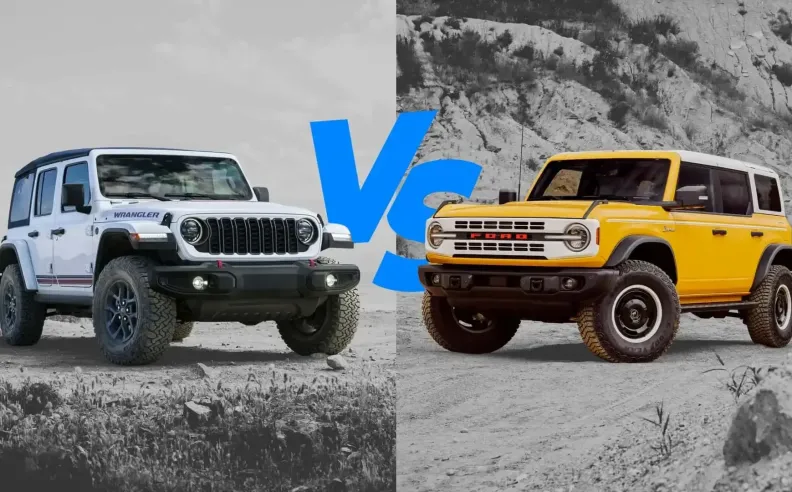
Few rivalries in the automotive world are as exciting as the competition between the Jeep Wrangler Rubicon and Ford Bronco Badlands. Both SUVs feature rugged body on frame construction, removable doors and roofs, manual transmission options, and impressive off road capabilities. In the US market, four door versions of the Bronco Badlands start at $50,885, while the Wrangler Rubicon starts at $53,325, placing them in direct competition. However, beneath their adventurous styling lie two different engineering philosophies. While Jeep embraces traditional mechanical capabilities, Ford combines rugged performance with modern technology and everyday comfort.
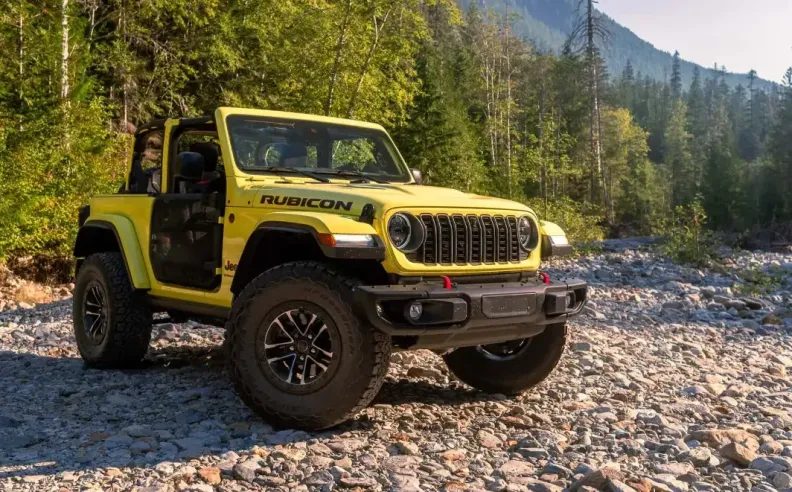
The Jeep Wrangler Rubicon comes standard with a 3.6 liter Pentastar V6 engine producing 285 horsepower and 353 Nm of torque, paired with either a six speed manual or an eight speed automatic transmission. An alternative 2.0 liter turbocharged engine delivers 270 horsepower and 400 Nm of torque. Equipped with the Rock Trac four wheel drive system, a 4:1 low range ratio, and heavy duty Dana axles, the Rubicon is particularly well suited to rock crawling and challenging terrain. Properly equipped versions can also tow up to 2,268 kg. Meanwhile, the Ford Bronco Badlands features a 2.3 liter EcoBoost engine producing up to 300 horsepower and 441 Nm of torque, with a seven speed manual or ten speed automatic transmission. For 2027, the available 3.0 liter twin turbocharged V6 raises output to 380 horsepower and 597 Nm of torque. Although its maximum towing capacity of 1,588 kg is lower than that of the properly equipped Rubicon, the Bronco offers impressive versatility with Bilstein shock absorbers, standard 33 inch tires, and an optional Sasquatch package featuring 35 inch tires.
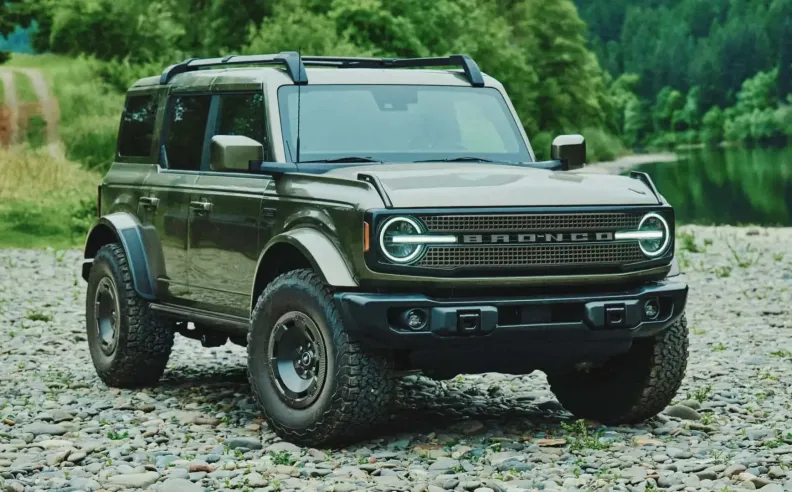
The Wrangler Rubicon maintains its traditional approach with solid front and rear axles, electronic differential locks, and a disconnecting front stabilizer bar that improves wheel articulation over challenging obstacles. Inside, a 12.3 inch Uconnect touchscreen supports wireless Apple CarPlay and Android Auto, while an available forward facing camera assists drivers on difficult trails. The Ford Bronco Badlands takes a more technology focused approach with seven G.O.A.T. driving modes, electronic front and rear differential locks, and advanced trail assistance features available with the automatic transmission. Its cabin features a 12 inch infotainment screen, a 12 inch digital instrument cluster, water resistant vinyl upholstery, washable flooring, and an available 360 degree camera system. Most importantly, its independent front suspension provides greater everyday driving comfort and more refined road manners. Ultimately, the Wrangler Rubicon remains particularly appealing to dedicated rock crawling enthusiasts and drivers who prioritize traditional mechanical capabilities. The Bronco Badlands, however, presents a more balanced proposition for drivers seeking a vehicle equally suited to daily commuting, desert adventures, and challenging weekend trails.

Started my career in Automotive Journalism in 2015. Even though I'm a pharmacist, hanging around cars all the time has created a passion for the automotive industry since day 1.


 SHARE