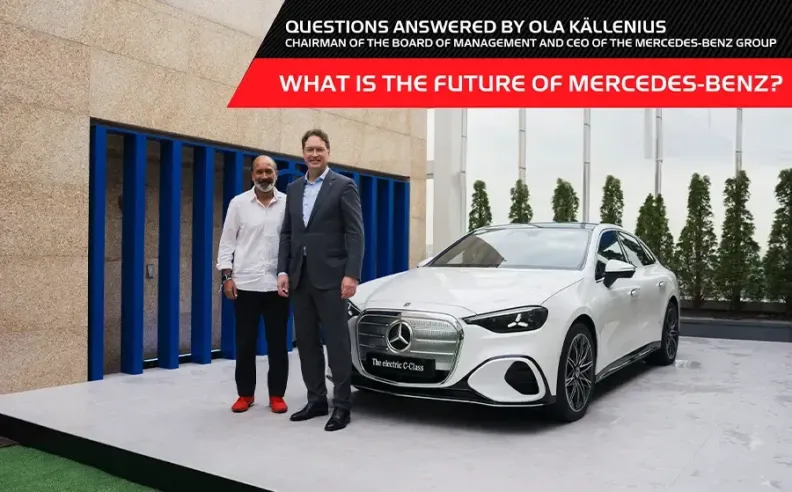
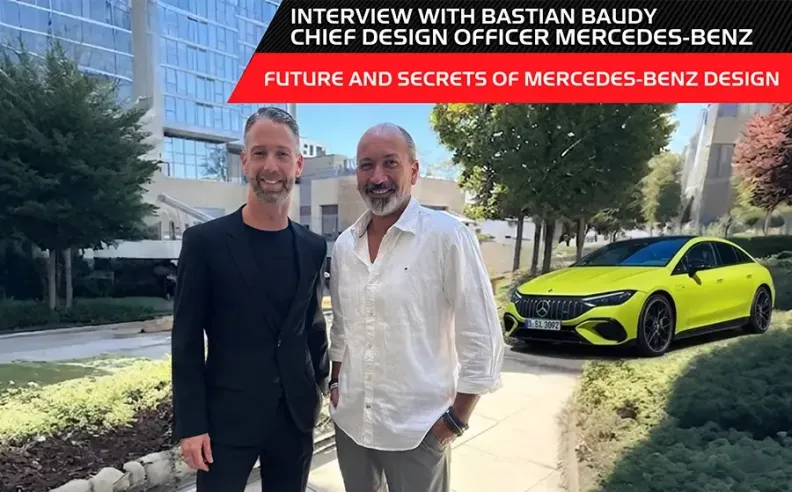
In an exclusive interview for the Middle East region, Motor 283 sat down with Ola Källenius, Chairman of the Board and CEO of Mercedes Benz, in a special setting that reflected the brand’s new era of luxury, innovation, and design evolution.
During the conversation, we discussed the future of Mercedes Benz, the brand’s fast moving electric strategy, the continued importance of emotional combustion engines, the role of AMG and motorsport, and how the latest Mercedes designs are shaping a new identity while staying true to the spirit of the three pointed star.
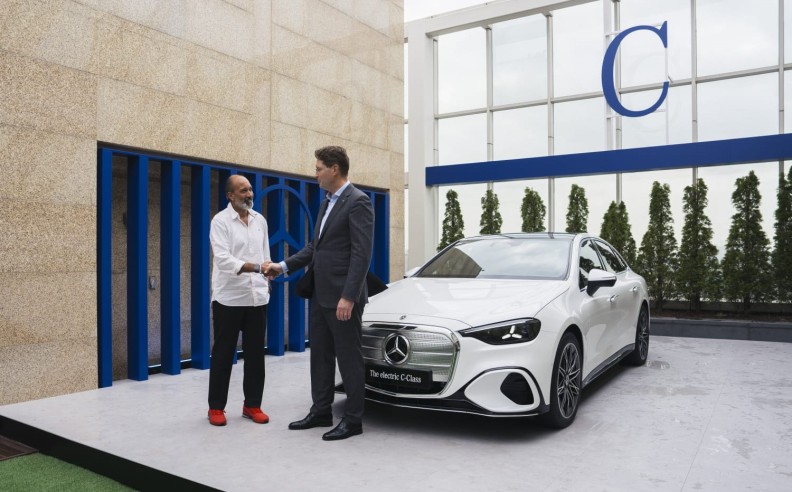
Ola Källenius: We have a very attractive range of electric vehicles, and we already had a few world premieres this year. But we are also renewing our high tech electrified combustion products as well. So it is an all of the above situation where customers get both.
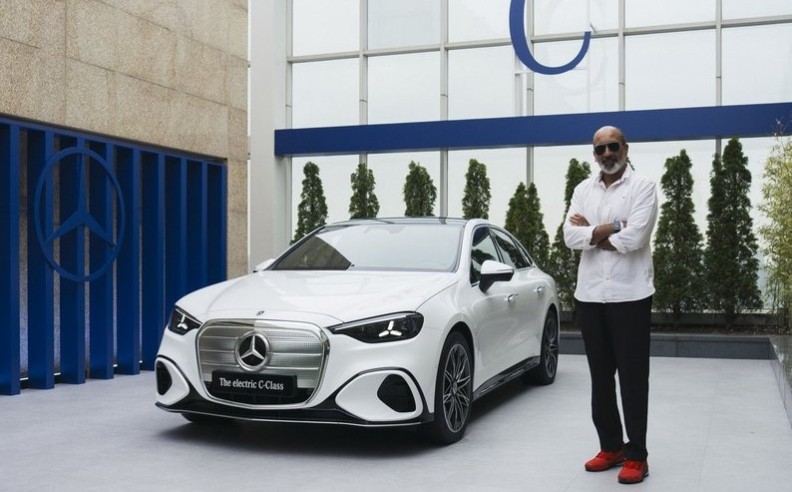
Depending on the market, adoption speed, regulations, and customer demand, the focus can be different from one country to another. But with the electric C Class, we are covering one of the white spots we had on the map. We do not have an electric C Class today. Now we have one. So if that is what the customer is looking for, the right product is there.
Motor 283: What about totally new products and new models? We all heard about the baby G Class, which has not yet been in the portfolio. What is the strategy for introducing totally new models?
Ola Källenius: It is now impossible to camouflage the small G, or the baby G, to a point where you cannot recognize what it actually is. So yes, that is a model that is entering the market, but it is still a couple of years away. It is now in development, and in due course we will show it to you. I do not know if we will bring it to the top of a hotel, but we will find an appropriate place to reveal that car.
Maybe one of the most exciting launches is only four weeks away, and that is the new electric AMG GT. That world premiere will take place in Los Angeles. It is built on a newly developed electric architecture from the ground up, and that architecture will carry a small family of vehicles. We are very excited about that in the performance segment.
I had the chance to drive with Doriane Pin, the French racing driver who is now testing Formula 1 cars for us. She is very quick. I drove a preproduction version of the AMG GT with her last week, and it took her about five seconds to familiarize herself with the car and really push it.
So this is a very broad strategy. We have the C Class, which is one of our biggest and most important models. Then we have extreme performance in the product offensive. We also have the VLE, which we showed a few weeks ago, and we want that car to revolutionize the people mover segment, or the grand limousine segment as we call it. This is a very broad product offensive, putting cars into segments we already serve while also broadening the overall appeal of the Mercedes brand.
Motor 283: From emotional sports cars, let us talk about city cars. You mentioned the new family of small cars.
Ola Källenius: In the entry level segment, we are rolling out a whole family on that architecture. Internally, we call that architecture MMA. The CLA is already in the market. The CLA Shooting Brake has just entered the market. The GLB is in the market, and the GLA, as the sportier city SUV, will come to the market at the end of this year.
Then, at the beginning of 2028, the successor to today’s A Class will arrive. That will complete the family. So we will have five different models in what we call entry level. Of course, they are not as small as some small cars from volume manufacturers, but we have never been in that segment.
With the A Class, CLA, GLA, GLB, and CLA Shooting Brake, that is the first step into the Mercedes family.
Ola Källenius: To start with China, you have a unique situation there because this phenomenon comes from the Chinese market and then appears in different versions around the world, except in the United States.
If Gottlieb Daimler went abroad two years after inventing the car, it is not surprising that a modern entrepreneur who starts a car company anywhere in the world wants to take that product across the world. That is normal.
What is unique in today’s automotive landscape is that the Chinese market has more than 100 brands competing in one market, which is probably more than you would see in a natural equilibrium. That is one reason competition in China is so fierce. They are trying to outcompete each other to survive. In that intense competition, many brands also look abroad to improve their economics. That is also normal. How it ultimately shakes out, we will see.
How do you meet it as an established manufacturer with a global footprint? Several things. The first and most important is innovation, technology, and new products. In the case of Mercedes, we need cutting edge digital technology that is as good as the new attackers, or better in some areas.
But we must also maintain the secret recipe of a Mercedes, like the Coca Cola recipe of Mercedes. Safety, quality, longevity, ride and drive, intelligence, and all the things that make a Mercedes a Mercedes. Then we add the digital dimension. We have to be in the technology race. We cannot rest for one second.
Second, we need to take advantage of the Chinese ecosystem. China is individually our biggest market, and over the last three or four years, we have significantly grown our research and development footprint there, as well as our supply set and partnering model. China is a vibrant, innovative, and competitive market. Why not use some of that for our global footprint?
There we can gain speed because of the pace of development. We can tap into an attractive cost structure, and in the areas where technology is moving fastest, we can have our finger on the pulse. In that sense, we must join the race. What we should not do, in my view, is withdraw from it. If you do not go there, they are coming to you.
Motor 283: You talk about V8 engines, and the audience goes silent because everyone cares about that. How can Mercedes relate the V8, possibly one of the best engines in the world, with its electric strategy?
Ola Källenius: As I said earlier, customer preferences will remain heterogeneous for at least 10 plus years. Some customers will say the electric C Class is the dream they have had their whole life, and they will choose it. There will also be an AMG version of that car that will blow your mind in terms of performance.
But there will also be customers who love the sound, the feel, the power, and the continuous power of a V8. So, around the same timeline as developing the electric drivetrain, we developed a brand new state of the art EU7 ready V8 with a flat crank. How crazy is that?
The first car you can buy with the Mercedes version of that V8 family is the S Class. You can order it now and have it delivered very soon. Michael Schiebe, who runs AMG, has more than teased it. He has clearly said that next year, the AMG version of that V8 is coming into different AMG models as well. And the GT3 monstrosity will have another version on top of that. Wait and see.
Motor 283: I want to lift the bar higher and talk about the V12. You manufacture a V12 for another car brand. Why not in a Mercedes?
Ola Källenius: For one other car brand, yes. But we have it. We are keeping the V12 in Mercedes Maybach for the foreseeable future. So it stays. Only in Europe, due to EU7, we did not bring it into the new S Class. But in other markets, absolutely. Sensible people like you in the Middle East, we are there for you.
For those of us in Europe, the new V8 is more powerful than the previous V12.
Motor 283: That is true. But for us, sometimes it is about the idea of the V12.
Ola Källenius: Yes. We call it sovereign performance. But the V8 uses less fuel, so that is not as interesting for the Middle East, I guess.
Motor 283: I would like to ask about the luxury aspect of Mercedes Benz. Before our meeting, we talked about one visualization of luxury in Asia, which is long wheelbase cars. But Mercedes is also strong with the Manufaktur program and with bespoke or limited edition cars. What is the trend in Asia, especially since we are now in Korea.
Ola Källenius: You can buy a very nice ready to wear suit from us with many different variations, but the tailor made suit is even better. We have always had Manufaktur in the background. If you knew who to call, you could get an individualized Mercedes. Customers of Maybach, G Class, S Class, and some AMG customers did that. We saw that trend growing and growing.
Even when I was at AMG around 15 years ago, we had exclusive customers who came in and wanted their tailor made suit. I remember a Dutch customer who was a complete performance enthusiast. He ordered two AMGs every year. They were always orange, very orange, and the leather was always black with orange stitching. He liked that. If he liked it, we liked it.
We saw the trend growing, and other luxury brands have also done this seriously for a long time. So we said, let us get serious about this. Around three years ago, we dedicated a whole area in our Sindelfingen plant, where we make most of the luxury models, to Manufaktur.
As a customer, you can go there, spend an afternoon, and go through the details. What stitching do you want? Where do you want certain details? I am using the suit analogy, but that is the idea. We are now growing this around the world. A couple of months ago, we opened our first Manufaktur Studio outside Germany.
Of course, you have to wait longer for your car. But customers who buy these cars usually have other means of transport. They want something individual. It can go beyond colors and materials. Maybe you have a family crest and want it embossed into the leather. Almost the sky is the limit. Increasing Manufacturing is very much part of our strategy.
Motor 283: Many brands announced aggressive electric plans, but the global market is now more complicated. Some customers are ready for electric cars, while others still want combustion engines or hybrids. How does Mercedes Benz view this transition today?
Ola Källenius: The direction toward electric mobility is clear, but the speed of adoption is different from one region to another. Some markets are moving very quickly, while others need more time because of infrastructure, customer habits, regulations, and cost considerations.
Motor 283: Does that mean Mercedes Benz needs a more flexible strategy?
Ola Källenius: Flexibility is very important. We need to offer customers the right product for their market and their lifestyle. Electric vehicles are a major part of our future, but we also understand that the transition has to be realistic. Premium customers expect choice, and Mercedes Benz has to deliver technology that meets their needs.
Motor 283: So the brand is not treating electrification as one single global answer?
Ola Källenius: No. We believe in electric mobility, but we also believe in customer choice. The future will not arrive at the same speed everywhere. That is why we need platforms, products, and technologies that allow us to respond to different markets while still moving toward a more sustainable future.
Motor 283: What about hydrogen?
Ola Källenius: We have done research and development in hydrogen, and we have put some vehicles into the market over the better part of 30 years. Fuel cell technology is something we understand very well.
But if you look at the marketplace, infrastructure, and the cost crossover between battery electric vehicles and fuel cell vehicles, which are also electric vehicles but use a different source of energy, our view is that the meaningful economics of hydrogen are in commercial vehicles, such as heavy duty trucks and maybe buses.
We do not believe the mainstream passenger car market for zero emission vehicles will be hydrogen, even though we launched the GLC fuel cell years ago. Technologically, it works. But we came to the conclusion that the mainstream passenger car market for zero emission mobility is battery electric.
Motor 283: In Seoul and South Korea, there is real interest in hydrogen. You see hydrogen refueling stations. Korea and Japan are into hydrogen.
Ola Källenius: That is true. Korea, Japan, and Germany also started down that route. But if you look at sold numbers, they are very small. Even in Korea, battery electric vehicles are scaling much faster because you already have mass adoption, supply infrastructure, and economies of scale.
Motor 283: Do you think hydrogen did not take off because of economies of scale?
Ola Källenius: Economies of scale are one reason. Infrastructure is another. If you want to duplicate the electric charging infrastructure with hydrogen refueling infrastructure, you need refueling to become omnipresent for convenience. I do not believe most markets will build those infrastructures in parallel. It is clear that battery electric infrastructure is far ahead.
Motor 283: With all the launches you have today, there has been a lot of talk about the health of the industry in Europe. Are you confident in your industrial footprint in Europe? Are things improving for production sites?
Ola Källenius: We are investing massively around the world, and we are also investing in Europe. But the Europe discussion is a little different in my view. Mercedes is a global company. We have 30 plants around the world and have been global for a very long time.
A little known fact is that after Gottlieb Daimler invented the car in 1886, two years later he set up shop in the United States. So we are one of the oldest American car companies. It is remarkable that entrepreneurs back then had that global mindset.
How does Europe improve its position in the world? It comes down to hard economics and competitiveness. The competitiveness report written by Mario Draghi is pretty much spot on. If you want to compete with other leading economies, you need secure and competitively priced energy. You need productivity and labor market flexibility. You need regulation that does not stifle entrepreneurship. You need a competitive tax regime, at least compared with other major economies.
You also need to complete the single market. In many cases it works, but in many cases it does not. In my view, Europe also needs a capital market union so that the financing climate begins to resemble more of what exists in the United States, or at least a better version of Europe itself.
These are the things Europe needs to do to improve competitiveness. It is like a football team. The strikers need to score more goals, the goalkeeper must not let anyone in, and every part of the team has to improve. Some of these things have been done, but too slowly. In the harsh reality of a world market economy, you either train as hard as the other football teams or you win fewer games.
Motor 283: One strength Mercedes has in Europe and other parts of the world is the local dealer network. Chinese brands are going for it and competing with your dealers. They are trying to attract local heroes. Some groups sell Mercedes and competitors at the same time. Is that an issue for you in the future?
Ola Källenius: We have incredibly strong brand standards and showroom separation. So the short answer is no.
We are in an open market with competition and strict antitrust laws, which should be part of a market economy. I am all for that. I am a market economist in its purest form. So if pan European multi brand dealer groups decide to pick up brands from other countries as well, that is natural.
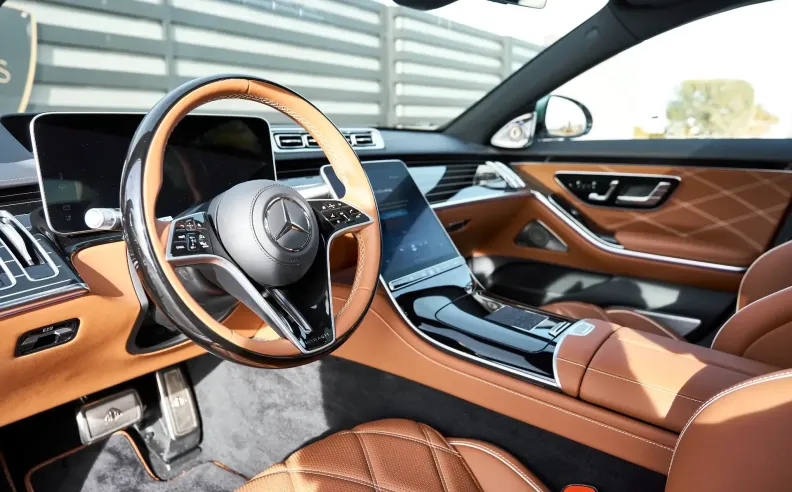
Motor 283: Luxury used to be defined by leather, wood, comfort, engine refinement, and craftsmanship. Today, customers also expect screens, AI, voice control, connected services, and automated driving. How do you keep Mercedes Benz luxury alive in this new era?
Ola Källenius: For Mercedes Benz, luxury is not only about materials. It is about the complete experience. It is about how the car makes you feel, how comfortable it is, how safe it is, how intelligent it is, and how naturally everything works together.
Motor 283: So technology becomes part of luxury?
Ola Källenius: Absolutely. If technology is complicated, it is not luxury. Luxury means technology that feels intuitive, helpful, and elegant. Artificial intelligence, digital services, and advanced driver assistance systems should make life easier for the customer. They should not overwhelm the driver.
Motor 283: Many new electric cars focus heavily on software. How does Mercedes Benz stand apart?
Ola Källenius: Our responsibility is to combine digital innovation with the values people expect from Mercedes Benz. Comfort, safety, refinement, design, and trust remain essential. We do not add technology just for the sake of technology. We add it when it improves the customer experience.
Motor 283: What do you think is the impact of rising gas prices since the start of the year? Do you already see any impact on orders or consumer confidence?
Ola Källenius: I think it is too early to tell. You are referring to the ongoing conflict, which has had an impact on oil prices and other factors. Can we directly connect that to order intake? It is hard to say, and it is too early to say.
In Europe, we already had great momentum. If we think about Belgium, which is an electric market, our electric car order intake in the first quarter of this year was about twice as high as in previous years. So we already had tremendous momentum.
In the Middle East, the sales mood or customer mood might be different than before the conflict started. That is quite obvious. But we will see how it plays out. When does the conflict end? Is there a rebound afterward? These are open questions.
One thing has been true for several years, and it is becoming even more true. If you are a rational total cost of ownership buyer, and depending on taxation in your country, an electric car can already be superior. Even without a major tax benefit, the efficiency is phenomenal. In vehicle efficiency is around 93 percent, and electricity in most countries, especially in Europe, is less expensive than petrol or diesel. So from a total cost of ownership point of view, the electric car is already superior today.
Motor 283: So the crisis might make people think more about that?
Ola Källenius: Maybe it creates awareness or heightens awareness. But I would be careful about saying that an event lasting two months fundamentally changes the market. It is too early to tell.
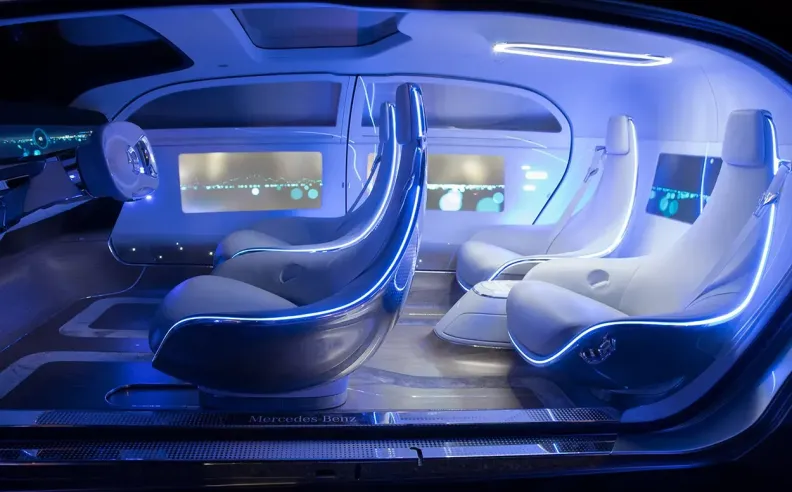
Motor 283: Mercedes Benz has one of the strongest legacies in the automotive world. With electric cars, AI, new screens, and new expectations, how do you keep the soul of the brand intact?
Ola Källenius: Heritage is very important, but heritage does not mean standing still. Mercedes Benz has always been an innovation company. The automobile itself started with innovation. So for us, moving forward is part of our identity.
Motor 283: Some enthusiasts worry that electric cars and software can make cars feel less emotional. How do you answer that?
Ola Källenius: Emotion is still central to what we do. Design, quality, comfort, performance, silence, power delivery, and the feeling of confidence behind the wheel all create emotion. A Mercedes Benz must still feel special. The technology may change, but the promise of desirability remains.
Motor 283: So the brand’s goal is not only to build advanced cars, but desirable cars?
Ola Källenius: Exactly. Our goal is to build the world’s most desirable cars. That means combining tradition with innovation. It means respecting what made Mercedes Benz great while also creating the future of luxury mobility.
Motor 283: Coming from the Middle East, I live in Dubai and see things up close. Everyone moves fast there. They are already preparing messages and marketing campaigns, so I think the market will recover fast.
Ola Källenius: You think the market will recover?
Motor 283: Yes.
Ola Källenius: I am glad to hear that. Economy is psychology and confidence. Through this conflict, confidence has been damaged somehow. If we can recover that fast, it would be very good because the Middle East is unbelievably important to Mercedes.
It is a region with economic growth. Every time I travel there, whether to the UAE, Saudi Arabia, or another country in the region, you feel that it is on the move. It is always on the move. You have a young population and a high amount of wealth, which fits our customer profile. The percentage of top end vehicles we sell in the Middle East is very high. So let us hope a solution is found as quickly as possible.
Motor 283: We are looking at 140 years of the automotive industry, and this year I have seen a huge evolution in almost every Mercedes model. Some models were not even ready for a facelift. What was the reason behind this overhaul of the Mercedes lineup?
Ola Källenius: I am not sure about two years, but three or four years ago we said that if we do this comprehensive push into electric vehicles, we have to do the same with combustion vehicles. Otherwise, it would be strange for the customer.
Take the new S Class as an example. It is the biggest refresh we have ever done for an S Class. All the technology of MB.OS, automated driving, and other features is in that car. We felt it would be strange if the customer got a CLA or C Class with the latest technology, but not in a combustion vehicle. The customer would ask if one is old and the other is new. No. Mercedes is only new and new.
So MB.OS is a platform. It goes into every single model. That was a conscious decision we made three or four years ago.
Motor 283: This is a very special year for Mercedes. It marks 140 years since the beginning of the automotive industry. From the very beginning, Mercedes was about challenging technology, challenging other racers, and now challenging the changes the industry is facing. What is the Mercedes vision for this new electrified era, especially in motorsport? We all love Mercedes Benz for the Silver Arrow history, the Group C cars from the eighties, and the successful Formula 1 cars from the 2000s. Where do you see Mercedes in the future of motorsport?
Ola Källenius: The common denominator has always been innovation and technology. If we take the very first Mercedes from 1901, it was conceived as a race car because Mr. Jellinek wanted to go racing in Nice. Racing is part of the core DNA of Mercedes, and it will always be there.
The pinnacle of racing is Formula 1, and thankfully the season has started well for us so far. But it will be a tough season. Whenever there are new rules, it takes time before the field sorts itself out. At least in the first three races, we have understood the new formula a little better than some others, and we are looking forward to the Miami race next.
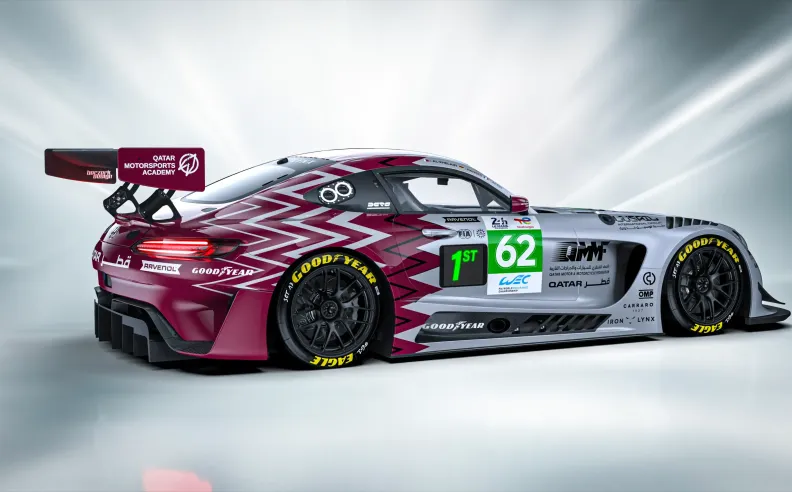
We will always be at the pinnacle of motorsport. What has also grown significantly in the last 15 years is GT racing. GT racing is now a worldwide phenomenon. It is also interesting to see a former Formula 1 world champion now driving with his team in Mercedes GT racing.
In GT racing, you have teams that look almost like professional works motorsport operations, even though by definition it is customer motorsport. But you also have very skilled gentleman racers in the same sport. Sometimes, as in the 24 Hours of Nürburgring, those drivers meet each other on track.
Imagine if you could drive against George Russell and Kimi Räikkönen in a Formula 1 race. I am not sure it would be a good experience, but imagine being able to do that. That is what GT racing allows you to do.
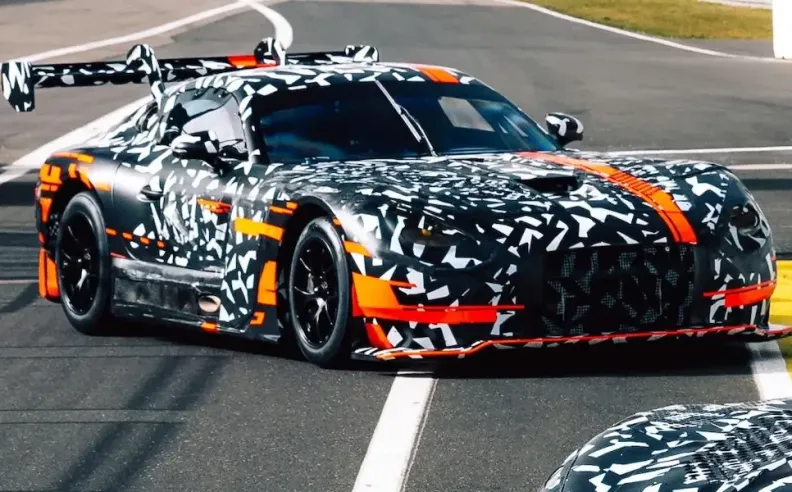
I see room to grow in GT racing. We have also teased, because it was impossible to keep it a secret, that we are working on the next GT3 race car. That dedicated next GT3 race car will also have a barely street legal version. I emphasize barely. For people buying in that segment, something very special is coming. Stay tuned. We will need a separate event for that car.
I drove a prototype just before Christmas. It is the vinyl record in an era of digital music.
Motor 283: That is a great sentence. Is the new car as brutal as the current GT3? When I saw the current GT3 at the Nürburgring, I actually heard it first, then I saw it. As a motorsport fanatic, it is very brutal in sound and character. Is that the same experience?
Ola Källenius: Have you driven a GT3 car yourself?
Motor 283: No, of course not.
Ola Källenius: You must do that. If you are a gentleman racer, or even just someone who gets the chance to drive a race car, the first time you do it you are a little intimidated. But once you do a few laps on track, you realize it is actually easier to drive a race car on a track than a road car.
The reasons are obvious. Less weight, better tires, better aerodynamics, and more grip. Depending on the racing series, you can have electronics or not, and you can turn them off. A real race driver obviously does not drive with ESP on because you need to feel the limit of grip.
In the previous GT, the GT3 race car looks similar to the road car, but it has a separate body construction and a different engine because of the regulations. Quite often, the horsepower of the road car is higher than the regulated horsepower of the race car. But because the race car has much less weight, it is still much faster.
With the monster that is on its way, it is the same thing. The road car has to be street legal, but it is the same concept.
Motor 283: Cherry on top. A question with a one word answer. After 140 years of innovation in the automotive industry and 140 years of Mercedes Benz, which one is your favorite?
Ola Källenius: Of all time? The 300 SL Gullwing.
Motor 283: Love it. Thank you. What a way to finish.
Ola Källenius: Excellent. Thank you, everybody.

Started my career in Automotive Journalism in 2015. Even though I'm a pharmacist, hanging around cars all the time has created a passion for the automotive industry since day 1.


 SHARE
SHARE