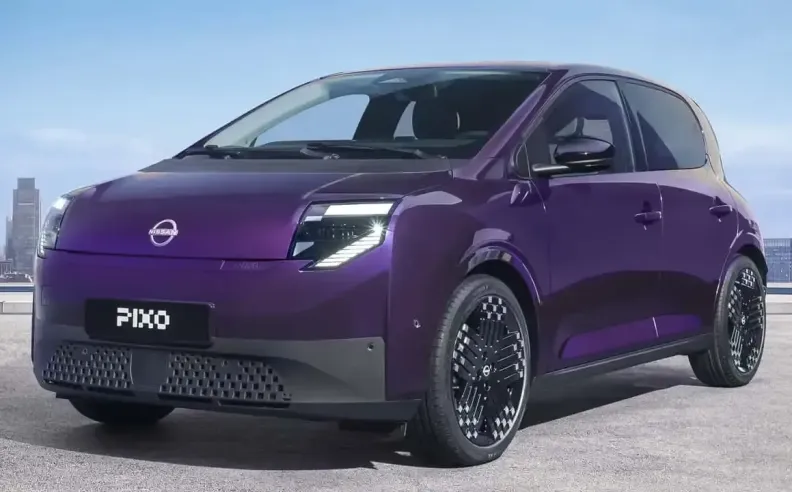
Nissan is returning to the compact electric city car segment with the new Pixo, a small EV created specifically for European cities.
The Pixo combines Nissan design with development support from Renault and will be manufactured at the Renault plant in Novo Mesto, Slovenia. This shared approach allows Nissan to introduce a new electric model while benefiting from the engineering and production resources available through its long standing partnership with Renault.
Customer deliveries are expected to begin in early 2027, adding another compact EV alongside the Leaf and Micra in the Nissan electric lineup.
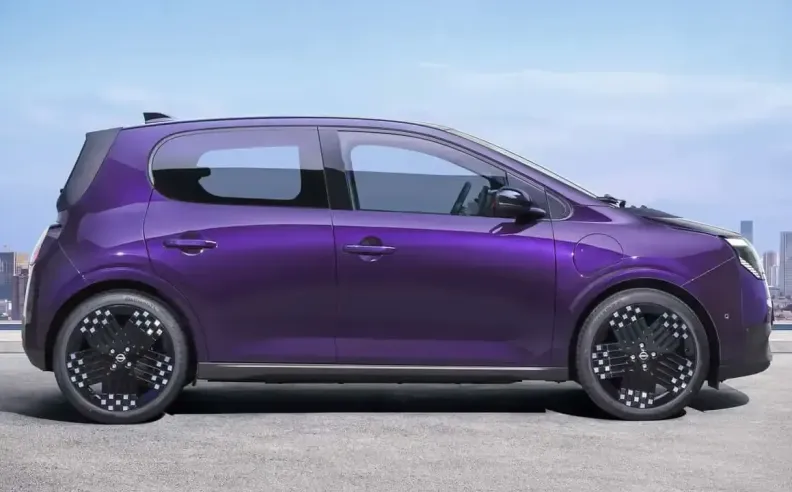
The Pixo measures just 3,796 mm long and 1,790 mm wide, giving it proportions designed for narrow streets, crowded city centers and small parking spaces
Its 2,492 mm wheelbase helps maximize interior room, while a turning circle of only 9.9 meters should make tight maneuvers noticeably easier.
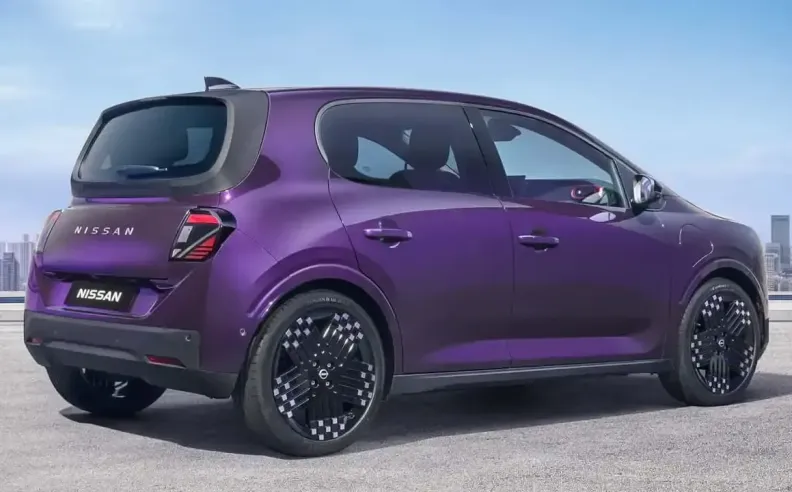
Nissan gives the car its own visual identity with pixel inspired lighting, distinctive front graphics and playful styling details that separate it from other compact electric models built through the Renault partnership.
The Pixo uses a 27.5 kWh lithium iron phosphate battery, marking the first use of this battery chemistry in a Nissan model sold in Europe.
Nissan claims a WLTP driving range of up to 259 km, making the Pixo primarily suited to daily commuting, shopping trips and short urban journeys.
Its electric motor produces 60 kW of power, while One Pedal technology allows the driver to accelerate, slow down and stop using mainly the accelerator pedal during city driving.
A 50 kW DC charging system comes as standard and can take the battery from 15 percent to 80 percent in approximately 28 minutes.
The Pixo also supports 11 kW AC charging for home and workplace use, along with bidirectional charging capability.
For a compact city EV, that combination gives owners useful flexibility between overnight charging and quicker charging stops during longer journeys.
Compact exterior dimensions do not mean the Pixo completely sacrifices interior practicality.
The individually sliding rear seats allow owners to prioritize either passenger room or cargo capacity depending on the journey.
Boot space measures 356 liters with the rear seats in place and increases to 1,221 liters when they are folded. Nissan also provides 18 liters of storage inside the cabin and a dedicated 50 liter area for charging cables.
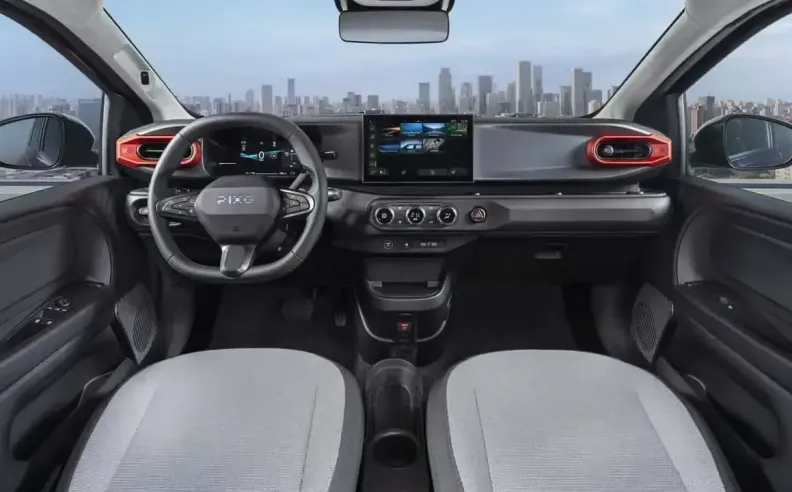
The cabin combines straightforward physical controls for frequently used functions with more advanced connected technology.
Drivers receive a 7 inch digital instrument display and a 10 inch central infotainment screen with Google built in services. Gemini AI is integrated into the system and can assist with navigation, communication and entertainment through natural voice commands.
Face ID can recognize the driver and automatically load personalized settings, while the MyNissan app provides remote access to charging and other vehicle functions.
This combination gives the Pixo a surprisingly advanced technology package for a small electric city car while retaining the simple controls many drivers still prefer.
Nissan plans to begin European customer deliveries in early 2027.
Official market specific pricing has not yet been announced. Nissan says pricing, specifications and preorder information will begin arriving from December 2026, so earlier estimates suggesting a price below 20,000 euros should not yet be treated as confirmed.

Started my career in Automotive Journalism in 2015. Even though I'm a pharmacist, hanging around cars all the time has created a passion for the automotive industry since day 1.



 SHARE
SHARE