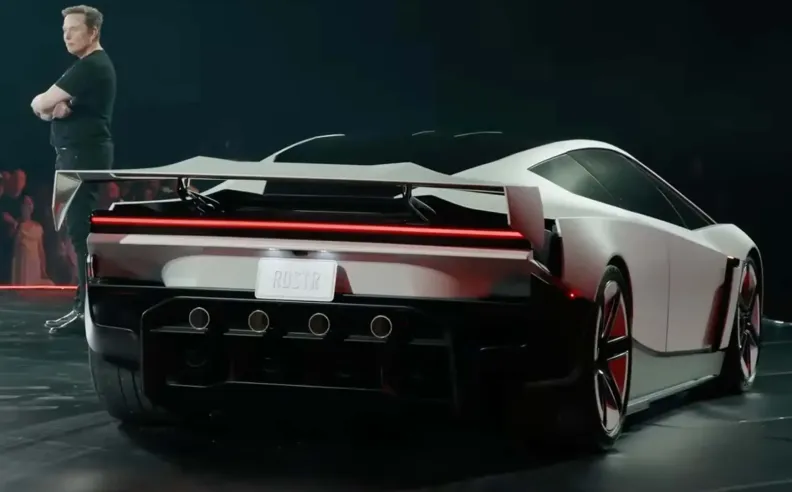

After nearly nine years of anticipation, Tesla has finally unveiled the next generation Roadster, and it is unlike anything the electric car industry has seen before. Revealed during a spectacular event in Texas, the electric supercar introduces revolutionary technology developed with SpaceX, including powerful gas thrusters, an advanced suction system, and acceleration that promises to challenge the limits of automotive performance. With production targeted for 2028, Tesla is looking to redefine what a modern supercar can achieve, both on the road and potentially even above it.
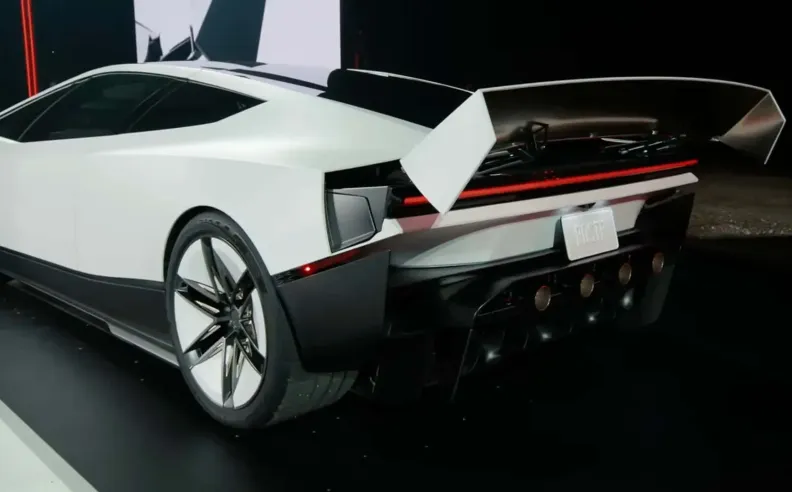
Tesla has taken electric performance to an entirely new level by introducing cold gas thrusters developed in collaboration with SpaceX. Unlike conventional electric motors that rely entirely on tire traction, these thrusters use compressed air to generate additional force, allowing the Roadster to accelerate with extraordinary intensity.
During the reveal, Tesla demonstrated a prototype accelerating from 0 to 60 mph in a claimed 0.8 seconds, making it one of the most ambitious acceleration figures ever announced for a road car. The technology also enables remarkable maneuvers, including sudden directional changes and controlled movement through the air. These demonstrations highlight the potential of combining electric propulsion with aerospace engineering, although production performance remains unverified.
Tesla plans to offer three versions of the Roadster. The Performance model focuses on electric speed and active aerodynamics, while the Thrust adds rear mounted gas thrusters for even more explosive acceleration. The flagship Rocket takes things further with multiple thrusters designed to enable short airborne maneuvers, transforming the traditional concept of a sports car into something closer to a futuristic flying machine.
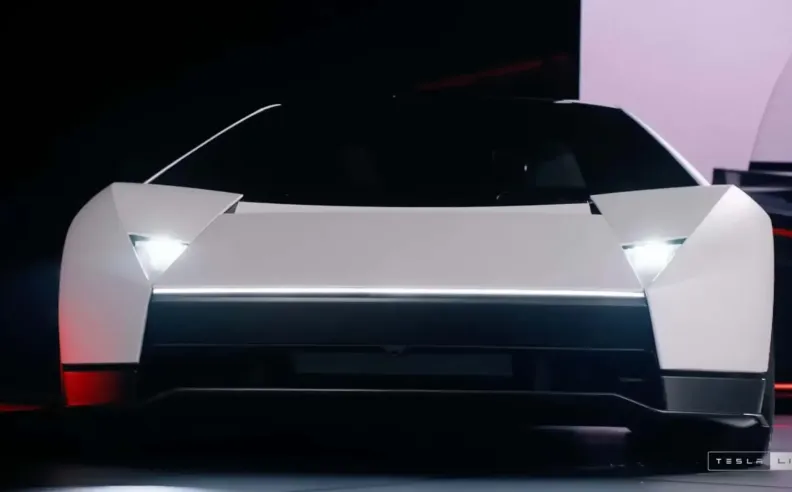
Beyond its extraordinary acceleration, the new Tesla Roadster introduces an innovative underbody suction system designed to dramatically increase grip. Using powerful fans beneath the vehicle, the system creates negative pressure that pulls the car toward the road surface, generating additional downforce even at relatively low speeds.
According to Tesla, this technology could allow the Roadster to achieve more than 2 Gs of lateral acceleration during cornering. During the global reveal, a prototype demonstrated the system's capabilities by driving upside down along a specially designed ramp before using its thrusters to perform an airborne maneuver. The demonstration offered a fascinating glimpse into how unconventional engineering could reshape future performance cars.
Despite Tesla's growing focus on autonomous driving, Elon Musk has positioned the Roadster as a celebration of human driving. Its design emphasizes driver involvement, exceptional handling, and extreme performance, with ambitious goals that include challenging existing lap records at some of the world's most demanding racetracks. However, these record breaking claims still need to be demonstrated through independently verified testing.
Tesla is targeting 2028 for the beginning of Roadster production, although the company has not confirmed an exact delivery schedule or final pricing. With its combination of electric power, aerospace inspired technology, and unprecedented performance ambitions, the new Roadster could become one of the most remarkable electric supercars ever produced, provided its groundbreaking prototype technology successfully reaches customers.

Started my career in Automotive Journalism in 2015. Even though I'm a pharmacist, hanging around cars all the time has created a passion for the automotive industry since day 1.


 SHARE