
Those tiny metal blocks attached to your wheels may look insignificant, but they play a major role in how smoothly your car drives. Wheels and tires are never perfectly uniform, so small differences in weight can create vibrations as they rotate. Wheel weights are carefully placed to correct those imbalances and help the entire tire and wheel assembly spin more evenly.
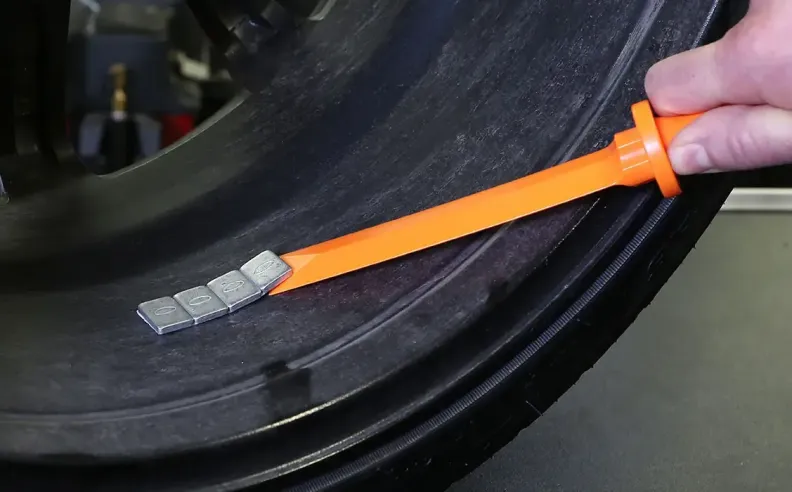
A tire and wheel may look perfectly round, but small variations in rubber thickness, the wheel itself, the valve stem, and the way the tire sits on the rim can all create slightly heavier and lighter areas.
At low speeds, these differences may go unnoticed. As speed increases, the imbalance becomes more obvious and can cause vibrations through the steering wheel, seat, or body of the car.
Technicians generally deal with two types of imbalance. Static imbalance causes an up and down movement, while dynamic imbalance can create a side to side wobble.
A technician places the complete tire and wheel assembly on a balancing machine, which spins it and measures where the weight is unevenly distributed.
The machine then calculates how much corrective weight is needed and exactly where it should be installed. The position matters just as much as the amount because the goal is to counteract the heavier section of the wheel.
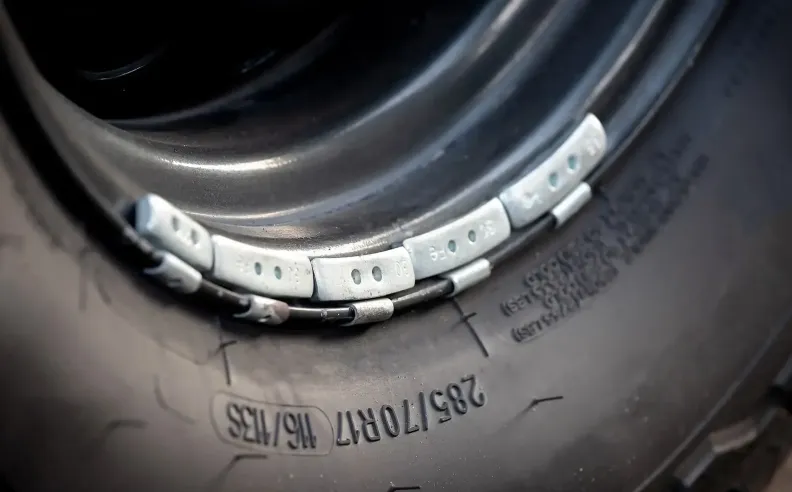
Some wheels use weights clipped to the rim, while many modern alloy wheels use adhesive weights hidden on the inside. In some cases, technicians may also rotate the tire on the wheel to reduce the amount of weight required.
Proper wheel balance helps keep the car smooth and predictable, especially at highway speeds. When a wheel is out of balance, repeated vibration can travel through the steering and suspension systems.
Over time, this can contribute to irregular tire wear and place additional stress on components such as wheel bearings, shocks, and suspension parts.
A wheel weight can also occasionally fall off, particularly if it is an adhesive type. If a new vibration appears suddenly after tire service or after previously smooth driving, a missing weight could be the reason.
Seeing wheel weights on your rims is therefore nothing to worry about. They are small but precisely calculated parts that help your tires rotate smoothly, protect ride quality, and reduce unwanted vibration.
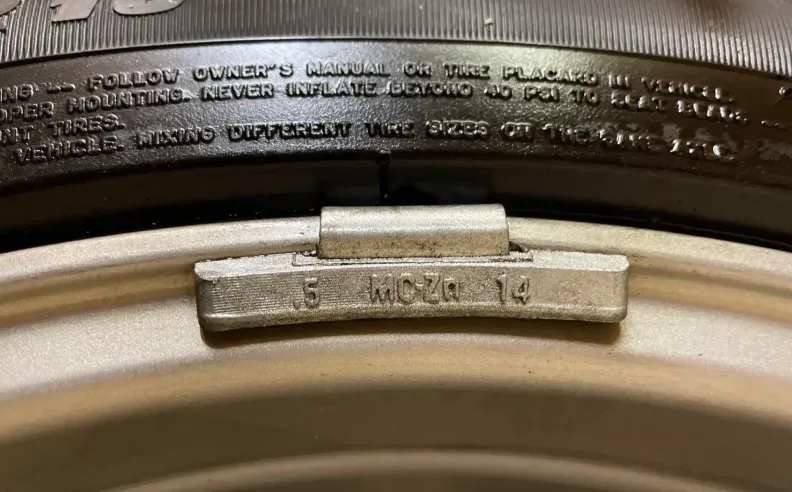
A few small balancing weights are completely normal. However, a wheel that requires a very large number of weights may deserve closer inspection.
Possible causes include a bent wheel, a tire that is not perfectly round, incorrect tire seating, or an internal tire defect. The tire and wheel combination may also simply need to be repositioned before balancing.
Modern road force balancing equipment can simulate the forces created while driving and help technicians identify problems that a basic balancing machine may miss.
An unusually large amount of weight does not automatically mean something is damaged, but repeated balancing problems combined with vibration should be investigated.

Started my career in Automotive Journalism in 2015. Even though I'm a pharmacist, hanging around cars all the time has created a passion for the automotive industry since day 1.


 SHARE
SHARE