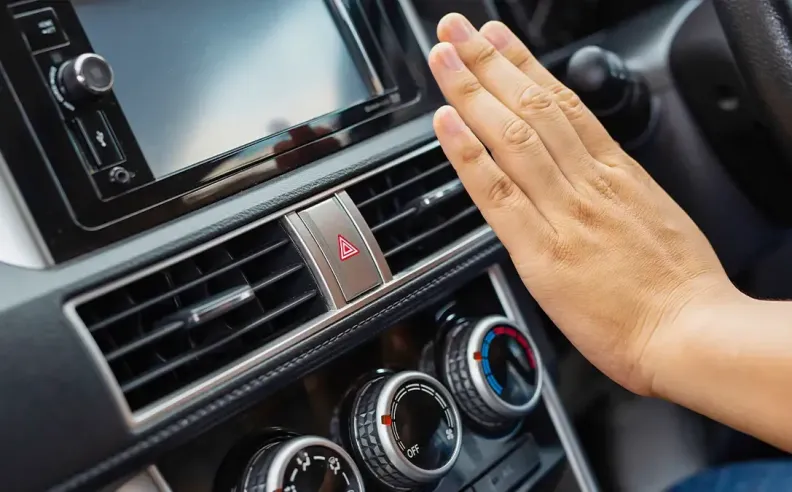
One of the most common things drivers notice during hot summer weather is that the air conditioning system seems much stronger once the car starts moving. While sitting in traffic or idling in a parking lot, the air may feel only mildly cool. Once the car reaches normal road speeds, however, noticeably colder air begins flowing through the vents.
Engine speed can play a role, especially in vehicles with mechanically driven compressors, but there is another major reason. Airflow across the condenser increases dramatically while the vehicle is moving, allowing the air conditioning system to release heat more efficiently.

The condenser is positioned near the front of the vehicle and plays a major role in releasing heat collected by the refrigerant.
When the car is stationary, airflow through the condenser depends largely on electric cooling fans. These fans are designed to provide sufficient airflow, but they cannot always match the volume of outside air naturally passing through the front of the car at road speed.
Once the vehicle starts moving, significantly more air flows through the condenser. This helps the refrigerant release heat faster, improving the efficiency of the entire air conditioning cycle and allowing the evaporator inside the cabin to provide colder air.
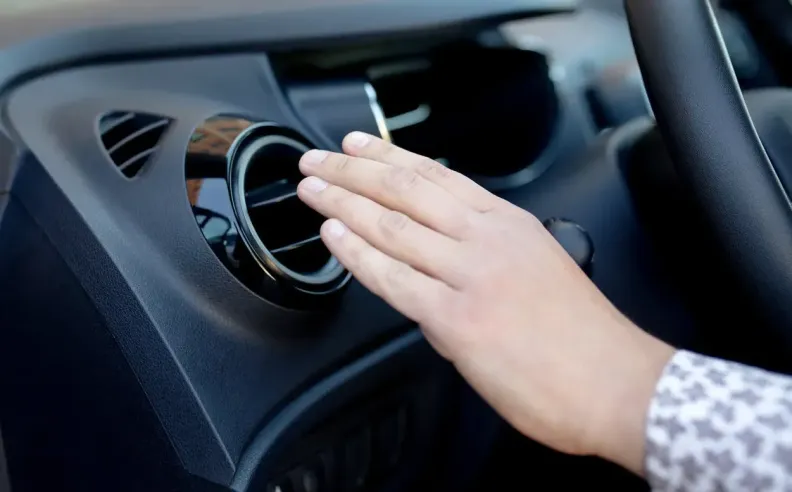
In many internal combustion vehicles, the air conditioning compressor is mechanically connected to the engine.
At idle, an engine may operate at roughly 700 to 900 rpm. Depending on the compressor design, this can mean lower refrigerant circulation than when the engine is operating at higher speeds.
During acceleration and normal driving, increased engine speed can allow some compressors to circulate refrigerant more effectively.
Modern vehicles often use variable displacement compressors and electronic controls that regulate output based on cabin demand. In these systems, additional condenser airflow while driving can become an even more important factor.

The air inside the vehicle is only part of what the air conditioning system needs to cool.
After a car sits under direct sunlight, the dashboard, seats, glass, door panels and other interior surfaces can store a considerable amount of heat. Even after cold air begins entering the cabin, those surfaces continue releasing heat.
As the vehicle keeps moving and the air conditioning operates for several minutes, temperatures across those interior surfaces gradually decrease. This can make the system feel increasingly effective even when the temperature coming from the vents has not changed dramatically.
A small difference between cooling performance while stationary and while driving can be normal. A dramatic difference may point to a problem.
If the air conditioning blows cold while driving but becomes warm or hot whenever the vehicle stops, the cooling fan should be one of the first components checked. A weak or failed fan can prevent enough air from passing through the condenser at low speeds.
A dirty or blocked condenser can cause similar symptoms because dust, debris and damaged fins reduce heat transfer.
Low refrigerant levels, incorrect system pressure or reduced compressor performance can also affect cooling, particularly when the vehicle is idling.
Driving does not suddenly give the air conditioning system extra cooling power. It simply creates better operating conditions. Increased airflow across the condenser, effective refrigerant circulation and the gradual removal of stored cabin heat all help explain why your car AC can feel noticeably colder once you are back on the road.


Started my career in Automotive Journalism in 2015. Even though I'm a pharmacist, hanging around cars all the time has created a passion for the automotive industry since day 1.


 SHARE
SHARE