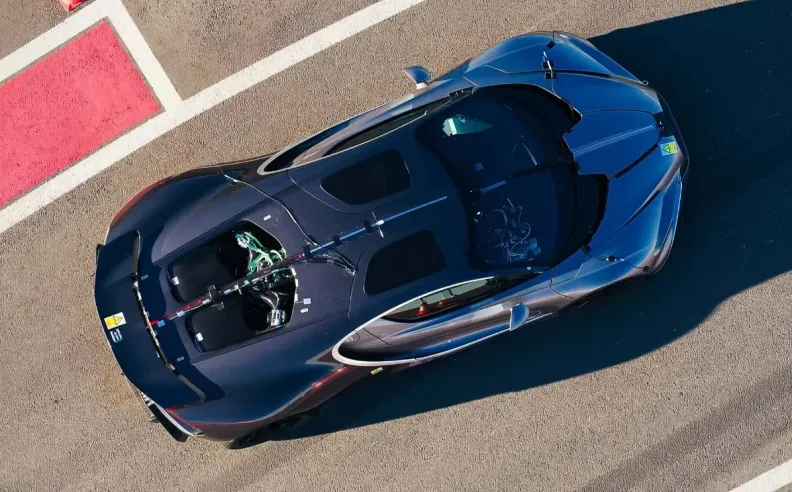
Bugatti could be preparing one of its most exciting creations yet, as CEO Mate Rimac has expressed interest in pairing the legendary V16 engine with a traditional manual transmission. Following the recent ownership changes that gave Bugatti greater independence from major automotive manufacturers, the French luxury brand is exploring possibilities that prioritize driving excitement over outright performance figures. Inspired by the naturally aspirated V16 engine introduced in the Tourbillon, this potential new hypercar could abandon hybrid technology in favor of a lighter, more engaging driving experience. Although nothing has been officially confirmed for production, the idea alone has already captured the attention of automotive enthusiasts and collectors worldwide.
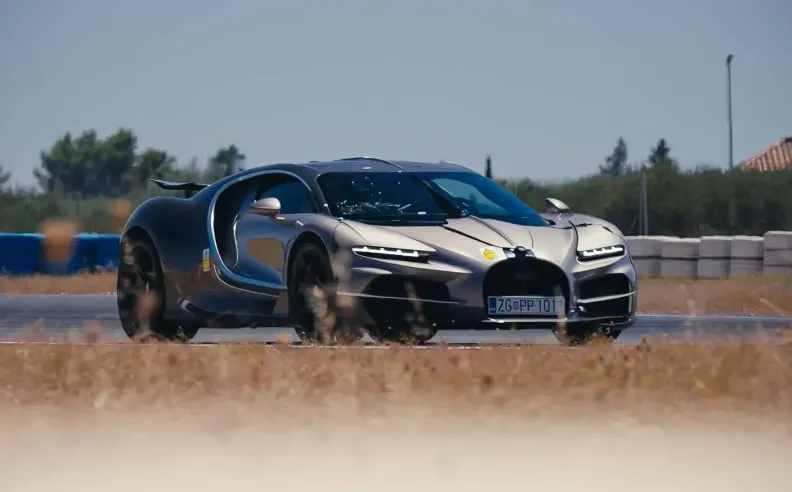
At the heart of this ambitious concept is the spectacular 8.3 liter naturally aspirated V16 engine developed alongside Cosworth. Producing approximately 986 horsepower and 900 Nm of torque without electric assistance, the engine can reach an incredible 9,000 rpm, delivering the kind of sound and mechanical character rarely experienced in modern hypercars.
In the Bugatti Tourbillon, this engine works alongside three electric motors and a 25 kWh battery to produce a combined 1,800 metric horsepower. However, removing these electric components could significantly reduce the overall vehicle weight, potentially making the car more agile and responsive through corners.
A lighter configuration would also shift the focus toward the natural power delivery of the V16 engine rather than the instant acceleration provided by electric motors. Although this would mean sacrificing some of the hybrid system performance advantages, it could create a more direct connection between the driver and the mechanical components.
For Bugatti, the attraction goes beyond weight reduction. Mate Rimac has expressed interest in returning to the philosophy of classic models such as the Type 35, where lightweight engineering, simplicity, and driver engagement played a central role in the overall experience.
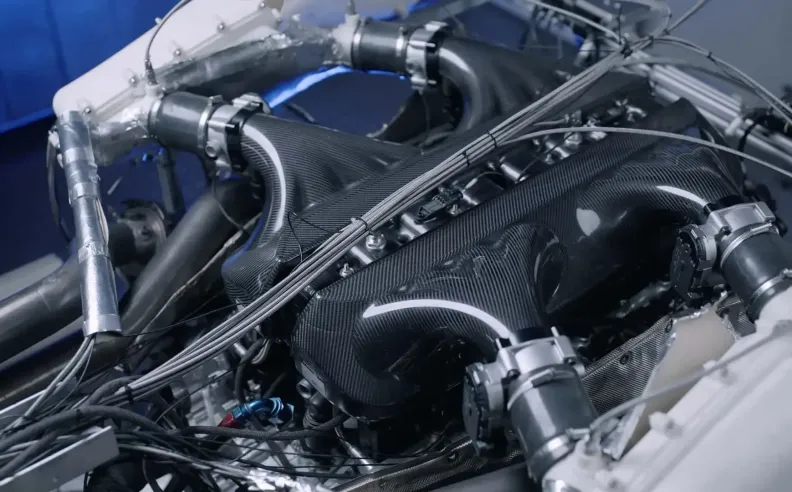
Developing a traditional manual gearbox for such an extraordinary engine presents a serious engineering challenge. With 900 Nm of torque flowing directly from the V16, Bugatti would need a transmission capable of handling immense mechanical forces while maintaining smooth, precise gear changes, even at extremely high engine speeds.
The clutch assembly, internal gears, and transmission cooling systems would all require careful engineering to deliver the durability expected from a Bugatti. More importantly, a genuine three pedal configuration would give drivers complete control over gear selection, creating a level of mechanical engagement that modern automatic transmissions cannot fully replicate.
Beyond the engineering appeal, a manual V16 Bugatti could become a particularly desirable addition to prestigious automotive collections. As traditional manual transmissions become increasingly uncommon in high performance cars, a limited production Bugatti combining 16 cylinders with a conventional gearbox could attract considerable interest from collectors in Saudi Arabia, the wider Gulf region, and international markets.
Its potential rarity, distinctive mechanical character, and connection to Bugatti history could support strong demand at future auctions. However, predictions that it would outperform hybrid versions in value over the next 20 to 30 years remain speculative, particularly since Bugatti has not announced production numbers, pricing, or a launch date.
For now, the possibility of a lighter, manual V16 Bugatti represents an exciting direction for a brand famous for pushing automotive engineering beyond conventional limits. Rather than pursuing ever greater horsepower figures, Bugatti could demonstrate that the ultimate luxury driving experience is sometimes defined by the connection between the driver, the engine, and the road.

Started my career in Automotive Journalism in 2015. Even though I'm a pharmacist, hanging around cars all the time has created a passion for the automotive industry since day 1.


 SHARE