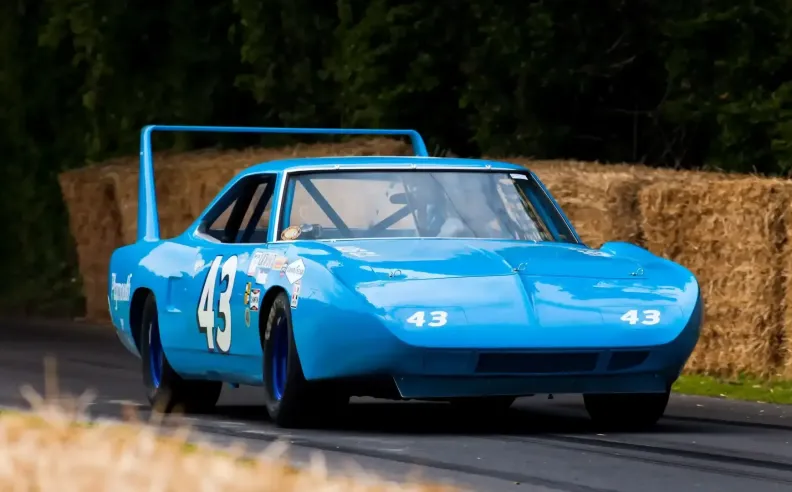
The late 1960s and early 1970s marked one of the wildest chapters in NASCAR history, when American muscle cars transformed into aerodynamic racing machines capable of incredible speeds. Leading this revolution were the 1969 Dodge Charger Daytona and the 1970 Plymouth Road Runner Superbird, two legendary cars instantly recognizable by their enormous rear wings and pointed front ends. Created during an intense battle for racing supremacy, these extraordinary machines pushed the boundaries of automotive engineering, shattered speed records, and eventually forced NASCAR to rewrite its regulations. Today, their remarkable history makes them some of the most desirable American muscle cars ever produced.
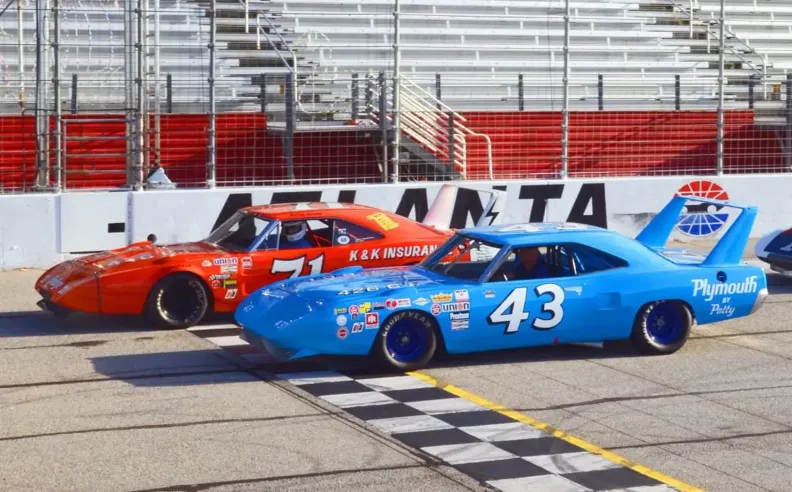
As NASCAR competition intensified, engineers at Dodge and Plymouth realized that increasing engine power alone was no longer enough to dominate high speed tracks. Aerodynamics became the ultimate advantage, leading to the development of radically redesigned bodies featuring extended pointed noses and towering rear wings. These modifications reduced aerodynamic drag while improving stability, allowing the cars to maintain extraordinary speeds around challenging oval circuits such as Talladega Superspeedway.
The breakthrough arrived on March 24, 1970, when legendary driver Buddy Baker took a Dodge Charger Daytona around Talladega at an astonishing 200.447 mph (322.6 km/h). This historic achievement marked the first officially recorded lap exceeding 200 mph on a closed circuit, demonstrating the incredible potential of aerodynamic engineering combined with powerful American V8 engines.
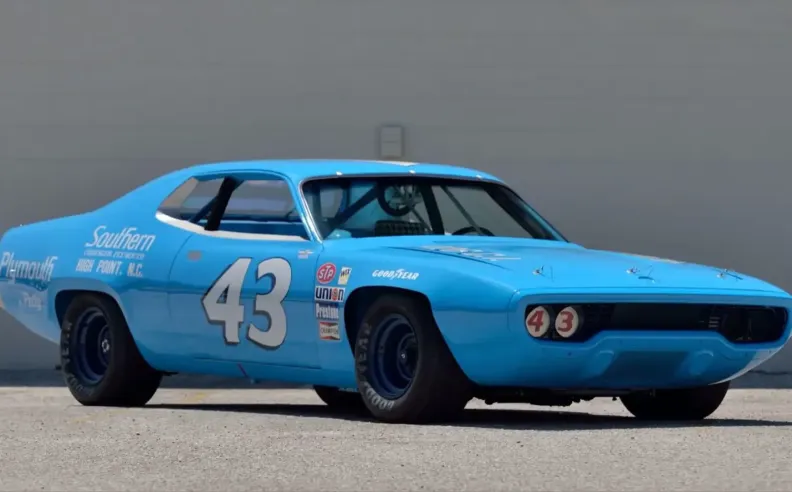
The overwhelming performance of these aerodynamic machines quickly became a concern for NASCAR officials. Their exceptional speeds raised questions about driver safety, while the increasing development costs threatened competitive balance between manufacturers. Rather than banning the cars outright, NASCAR introduced new regulations for the 1971 season that dramatically reduced their competitive advantage.
Under the revised rules, specially designed aerodynamic cars were restricted to engines with a maximum displacement of 305 cubic inches (5.0 liters), while conventional stock car bodies could continue using significantly larger V8 engines. This restriction effectively eliminated the power advantage that had made the winged machines so successful. As a result, racing teams gradually abandoned the Daytona and Superbird in favor of more conventional designs, bringing one of NASCAR's most innovative engineering periods to an abrupt end.
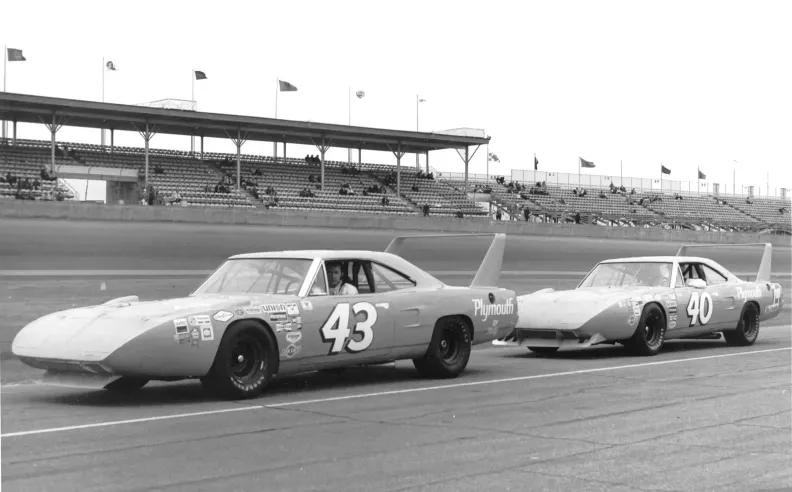
Although their racing careers were relatively short, the Daytona and Superbird left an unforgettable mark on automotive history. NASCAR regulations required manufacturers to produce street legal versions of their racing machines, resulting in approximately 503 Dodge Charger Daytonas in 1969 and 1,935 Plymouth Superbirds in 1970.
These limited production numbers eventually transformed both models into highly desirable collector cars, particularly examples equipped with the legendary 426 Hemi V8 engine. Their dramatic styling, racing heritage, and historical significance continue to attract enthusiasts and collectors willing to pay substantial prices for well preserved examples.
Today, the Dodge Charger Daytona and Plymouth Superbird represent far more than classic American muscle cars. They symbolize an unforgettable era when manufacturers pushed engineering to the extreme, proving that innovative aerodynamics could redefine racing performance and create automotive legends that remain celebrated decades later.

Started my career in Automotive Journalism in 2015. Even though I'm a pharmacist, hanging around cars all the time has created a passion for the automotive industry since day 1.


 SHARE