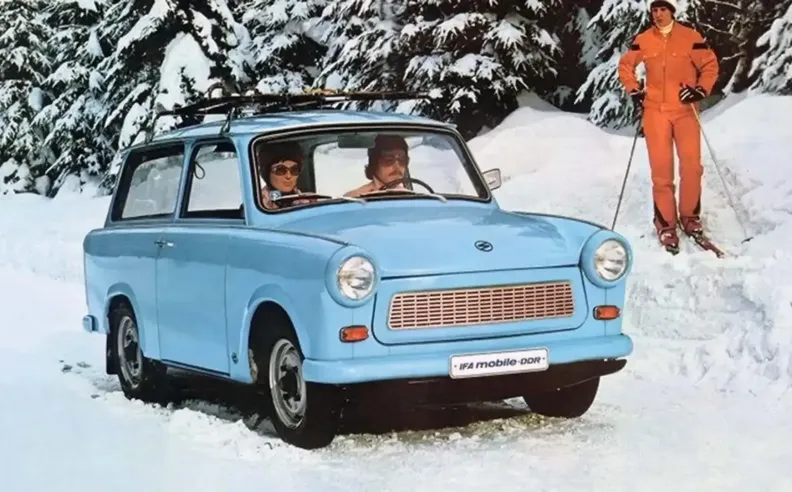
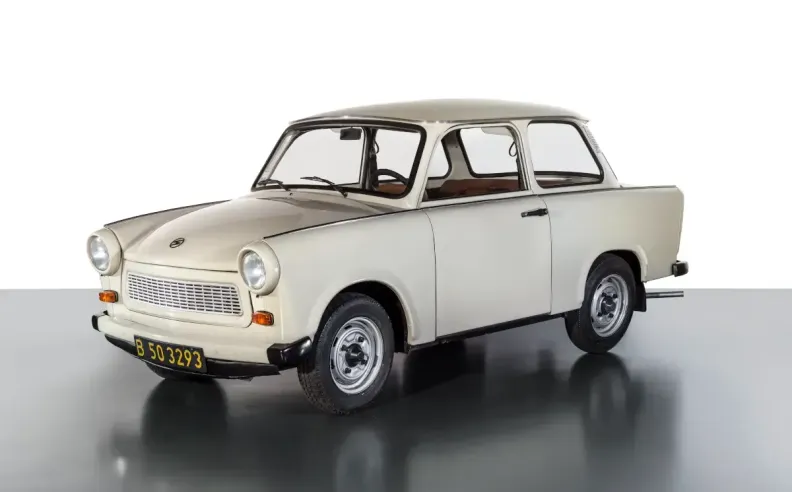
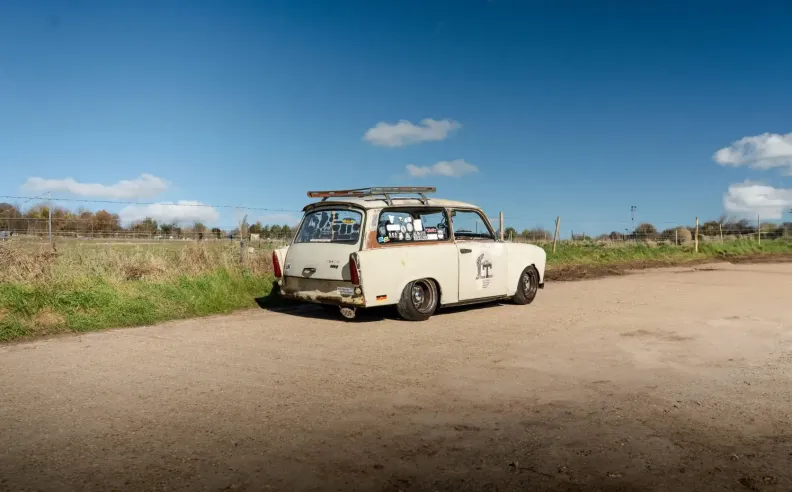
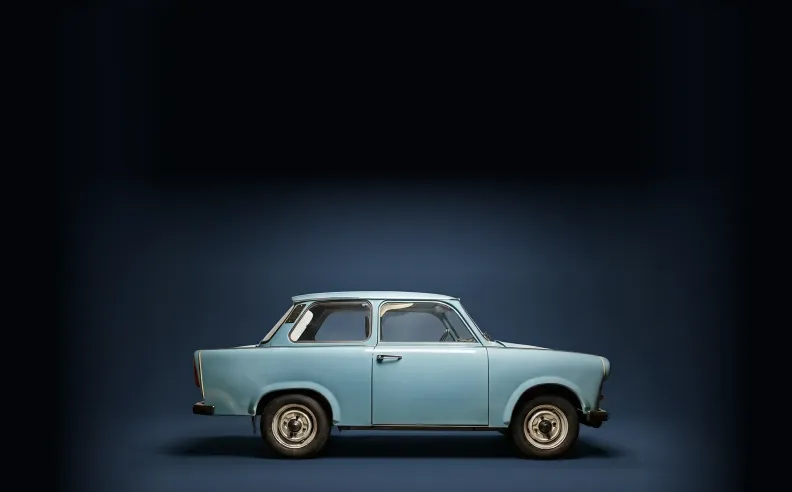
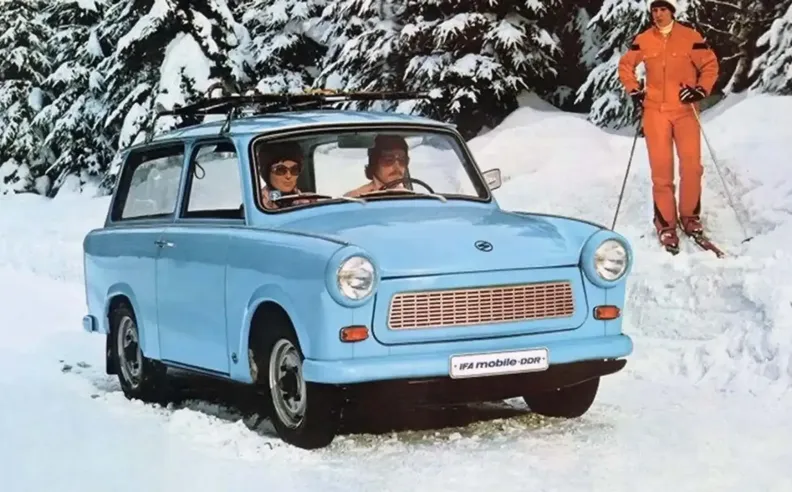
When the Berlin Wall fell in 1989, thousands of East Germans crossed into the West behind the wheel of one of the most unusual cars ever produced. The Trabant 601, a small, noisy vehicle with a smoky exhaust and a body made partly from plastic, quickly became a symbol of an entire era. Often criticized as one of the worst cars of the communist period, the Trabant was nevertheless an essential part of everyday life in East Germany. Produced from 1964 to 1990, it remained largely unchanged for more than 25 years, revealing how political isolation, industrial shortages, and limited competition shaped automotive engineering behind the Iron Curtain.
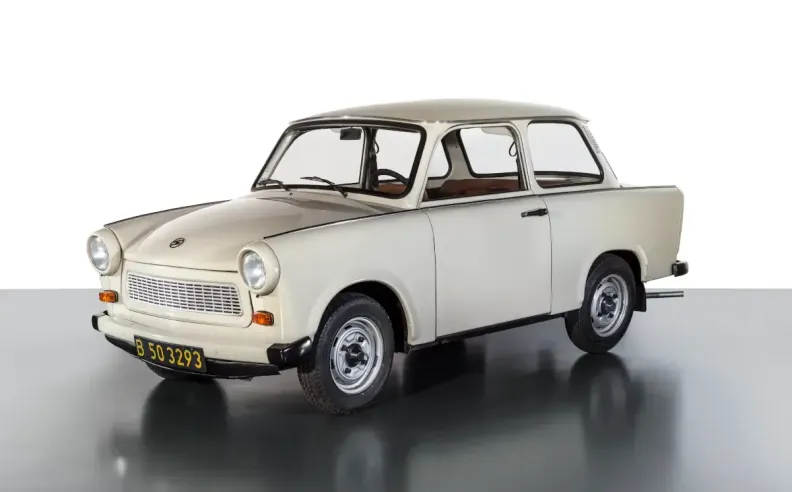
At the heart of the Trabant 601 was a surprisingly basic 594 cc, air cooled, two cylinder engine operating on a two stroke cycle. Initially producing around 23 horsepower, later versions increased output to just 26 horsepower. Combined with a four speed manual transmission driving the front wheels, the engine pushed a vehicle weighing approximately 615 kg to a top speed of around 100 km/h. Acceleration was painfully slow, while the distinctive engine noise and thick exhaust smoke became defining characteristics of the Trabant. As Western manufacturers adopted more advanced four stroke engines, East Germany continued producing the same outdated mechanical design with only minor improvements. A major upgrade finally arrived in 1990 with the successor Trabant 1.1, which introduced a 1,043 cc four stroke engine derived from the Volkswagen Polo. Unfortunately, this modernization came too late to save the car from disappearing as East Germany transitioned toward a competitive automotive market.
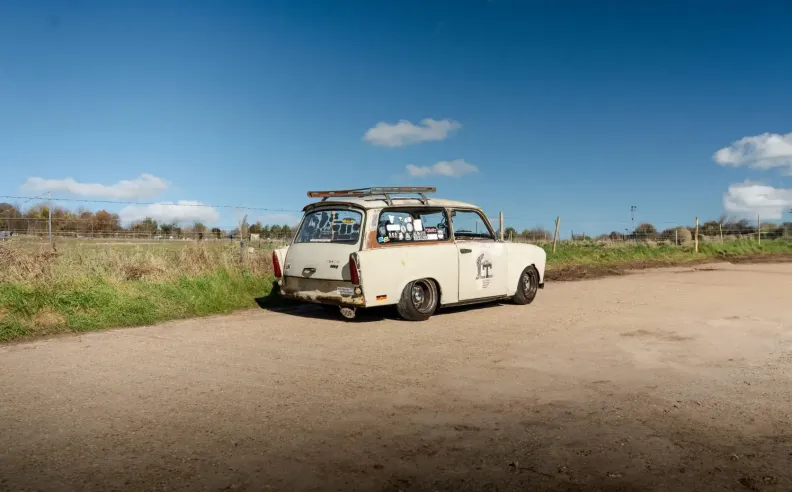
Perhaps the most fascinating feature of the Trabant 601 was its unconventional body construction. Rather than relying entirely on traditional steel body panels, engineers developed a composite material called Duroplast, made from phenolic resins reinforced with recycled cotton or wool fibers. This innovative solution addressed the severe shortage of steel in East Germany while offering advantages such as reduced weight and resistance to rust. However, the material also presented challenges, particularly when repairing damaged panels, while the overall vehicle offered limited crash protection compared with modern automobiles. Beneath the composite panels, a steel structure provided essential structural support. Yet the greatest problem surrounding the Trabant was not its unusual construction but the economic system responsible for producing it. With few alternatives available and demand consistently exceeding supply, customers commonly waited between seven and ten years for a new car, sometimes even longer. Despite its outdated engineering, more than 2.8 million examples of the Trabant 601 were manufactured between 1964 and 1990. Today, the same vehicle once criticized for its primitive technology has become a beloved collector car and a powerful reminder of daily life during the Cold War.

Started my career in Automotive Journalism in 2015. Even though I'm a pharmacist, hanging around cars all the time has created a passion for the automotive industry since day 1.


 SHARE
 SEE FULL GALLERY