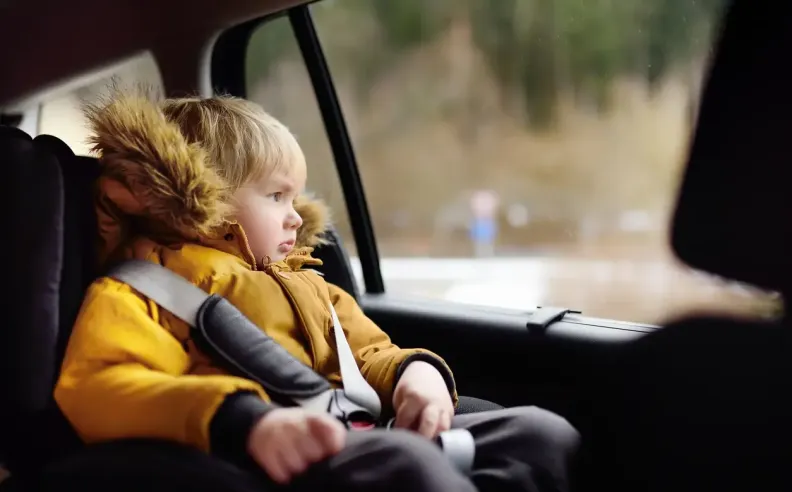
Placing a child in the front passenger seat might seem convenient, especially when a parent is driving alone and wants to keep their child within sight. However, this seemingly harmless decision can expose young passengers to serious injuries during a collision. Front airbags are designed to protect adults, but their powerful deployment can be extremely dangerous for children, particularly those traveling in rear facing car seats. Safety organizations, including the National Highway Traffic Safety Administration and the American Academy of Pediatrics, recommend that children younger than 13 always travel in the back seat whenever possible. Understanding these risks and choosing the appropriate child restraint system can make a critical difference in protecting young passengers.
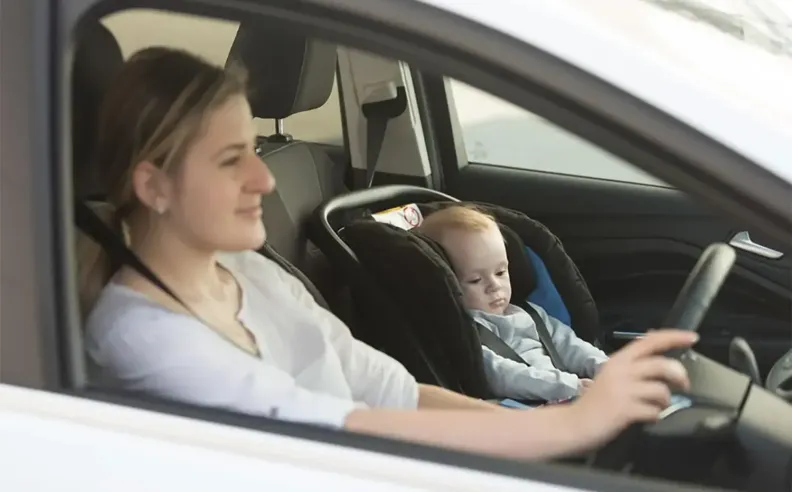
Front airbags are engineered to deploy almost instantly during a collision, inflating in less than 1/20th of a second to prevent an adult passenger from striking the dashboard or windshield. While this technology saves lives, the tremendous force generated during deployment can cause severe head, neck, and chest injuries to children sitting too close to the dashboard. Unlike adults, young children have smaller bodies and developing skeletal structures, making them particularly vulnerable to these forces.
The danger becomes even greater when a rear facing child seat is installed in front of an active passenger airbag. During a crash, the rapidly expanding airbag can strike the back of the child seat directly, transferring tremendous force toward the infant's head and neck. This can result in catastrophic injuries, even during collisions at relatively low speeds. For this reason, rear facing child seats must never be installed in front of an active frontal airbag.
Modern vehicles sometimes feature advanced sensors that automatically deactivate the passenger airbag when a child or child restraint is detected. However, these systems should never be considered a replacement for placing children in the rear seats. Even with advanced airbag technology, the back seat remains the recommended location for passengers younger than 13.
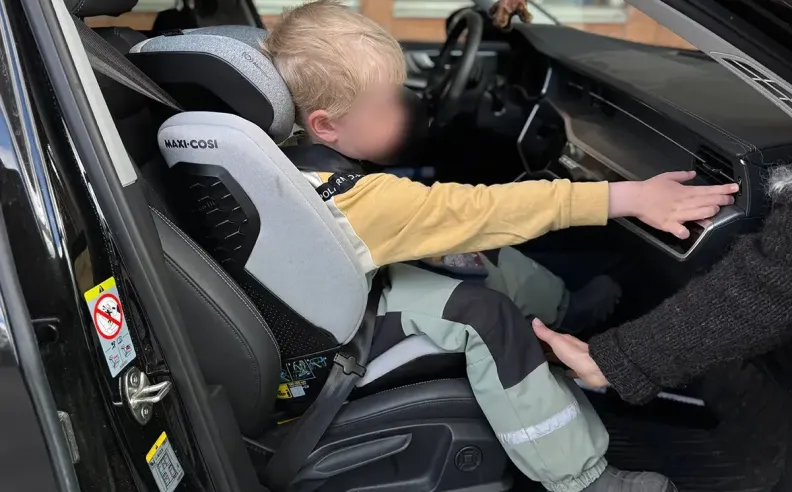
Protecting children begins with selecting the correct restraint system according to their height, weight, and physical development. The American Academy of Pediatrics recommends four important stages, with each transition occurring only when the child exceeds the height or weight limits of their current seat.
The first stage involves a rear facing car seat, which supports the child's head, neck, and spine during a collision. Children should remain in this position for as long as their seat permits. Once they outgrow it, they can transition to a forward facing seat equipped with an internal harness and a top tether. The third stage introduces a booster seat, positioning the vehicle's seat belt correctly across the upper thighs and shoulder rather than the stomach or neck. Finally, children can use a standard seat belt when it fits properly, with their back against the seat, knees bending comfortably at its edge, and the shoulder belt crossing the center of the chest.
Special precautions become necessary when traveling in vehicles without rear passenger seats, such as certain pickup trucks and two seat sports cars. Whenever possible, parents should choose another vehicle with suitable rear seating. If front seat transportation is unavoidable, they must follow the vehicle manufacturer's instructions, verify that the child restraint is approved for that seating position, and comply with local safety regulations. A rear facing child seat must never be positioned in front of an active airbag. It may only be considered where the passenger airbag can be positively disabled through an approved system and the installation is permitted. For a child using an appropriate forward facing restraint, moving the passenger seat as far back as possible provides additional distance from the dashboard.
Ultimately, child passenger safety depends on more than simply fastening a seat belt. Correct installation, an appropriate restraint system, and choosing the safest available seating position are essential. Although vehicle safety technology continues to evolve, keeping children younger than 13 properly restrained in the back seat remains one of the most important precautions parents can take.

Started my career in Automotive Journalism in 2015. Even though I'm a pharmacist, hanging around cars all the time has created a passion for the automotive industry since day 1.



 SHARE