Car window tint is one of the most practical upgrades for drivers in the UAE. It can reduce heat inside the cabin, cut glare, improve privacy and help protect interior materials from constant exposure to sunlight.
However, drivers need to stay within the legal limits. Excessive tint can lead to fines, while Dubai also applies separate vehicle impound rules for serious tint violations. Choosing the right tint is therefore about balancing comfort, visibility, heat protection and legality.
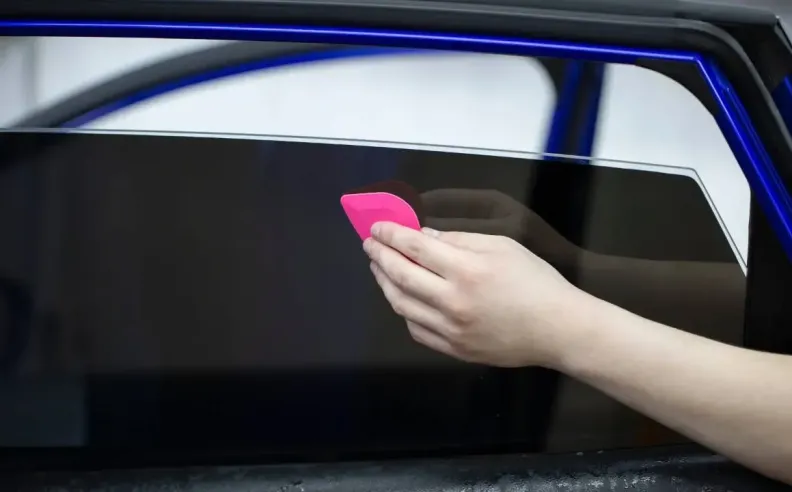
Yes. Private vehicles in the UAE are generally permitted to use window tint of up to 50 percent. This allowance applies to the vehicle windows permitted under UAE traffic rules, while tinting the front windscreen requires official permission. Taxis and trucks are subject to different restrictions.
Drivers should also remember that tint percentages can be confusing. Some workshops describe how dark a film appears, while manufacturers may use Visible Light Transmission to show how much light passes through the glass.
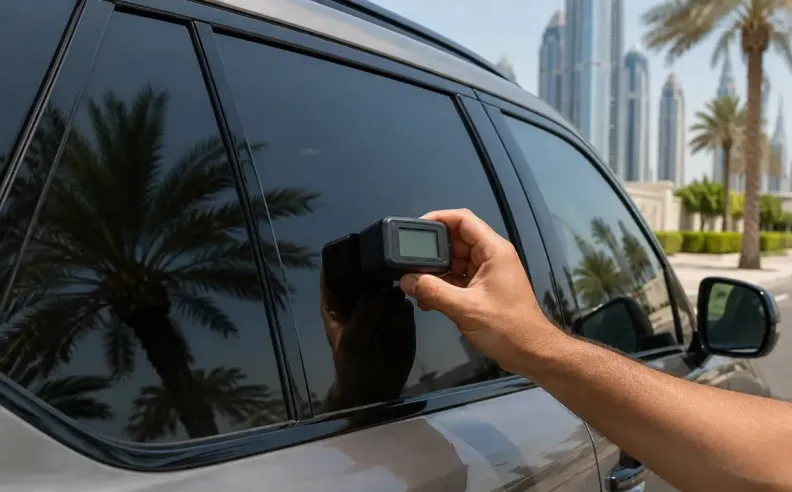
Factory tinted glass can also affect the final result. For that reason, it is worth asking the installer to measure the finished glass rather than relying only on the rating printed on the tint film.
Dyed tint is usually the most affordable option. It improves privacy and reduces glare, but cheaper films may offer limited heat rejection and can fade or bubble after prolonged exposure to strong sunlight.
Metalised film uses metallic particles to reflect heat and can be more durable. The downside is that some products may interfere with mobile signals, GPS reception and other electronic systems.
Carbon tint provides better heat rejection than many basic dyed films and usually avoids signal interference. It can be a good middle ground between price and performance.
Ceramic tint is one of the strongest choices for UAE conditions. It can provide high levels of heat and ultraviolet protection while maintaining good visibility and avoiding common signal interference problems.
Nano ceramic products can provide similar benefits with improved clarity and heat rejection, although buyers should check the actual specifications rather than relying only on marketing terminology.
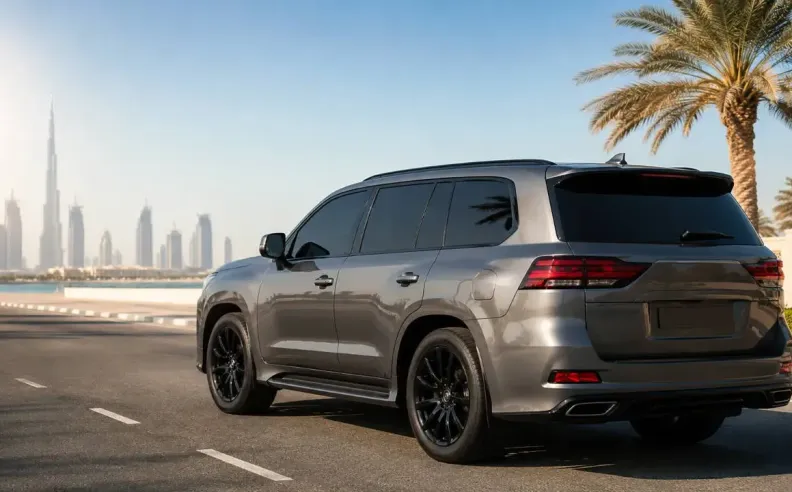
Exceeding the permitted tint limit can result in a traffic fine of AED 1,500 under UAE traffic rules.
Dubai adds another important penalty. Decree No. 30 of 2023 specifically lists excessive window tint and tinting the windscreen without a permit among violations that can lead to administrative vehicle impoundment. Releasing a vehicle impounded for this offence requires a payment of AED 10,000.
This release payment is separate from any traffic fine that may also apply.
Drivers should therefore avoid relying only on a workshop claiming that a film is legal. The final tint installed on the vehicle needs to remain within the permitted limit.
High quality window tint can make a noticeable difference during the UAE summer. It can reduce solar heat entering the cabin and make the interior more comfortable after the vehicle has been parked outside.
Tint can also reduce glare, filter ultraviolet radiation and help slow fading or cracking of dashboards, seats and interior trim.
Privacy is another major benefit, particularly for rear passengers. Families may also appreciate the reduction in direct sunlight reaching children sitting in the back.
However, very dark film does not automatically mean better heat protection. The construction and quality of the film often matter more than its appearance.
Basic tint packages can start at around AED 150 to AED 400, depending on the vehicle and workshop.
Carbon and more affordable ceramic films commonly sit between roughly AED 400 and AED 800. Branded ceramic products can cost between AED 800 and AED 1,500, while premium films can exceed AED 1,500.
Large SUVs may cost more because of their greater glass area. Prices can also increase depending on the brand, warranty and complexity of installation.
Choosing purely by price is rarely the best approach. A cheaper film that fades quickly or rejects little heat may need replacement much sooner than a better quality product.

Started my career in Automotive Journalism in 2015. Even though I'm a pharmacist, hanging around cars all the time has created a passion for the automotive industry since day 1.


 SHARE
SHARE