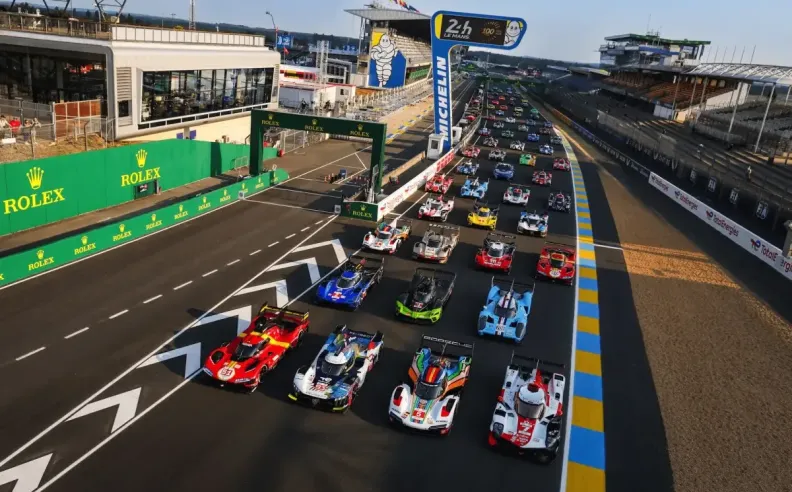
While Formula 1 races celebrate speed, precision, and extraordinary driving talent, the 24 Hours of Le Mans introduces an entirely different challenge. Rather than completing a predetermined number of laps, competitors must cover the greatest possible distance within an entire day of continuous racing. Dating back to 1923, this legendary motorsport event was established by the Automobile Club de l’Ouest to test automotive reliability and durability rather than outright speed alone. But why exactly 24 hours? Behind this unique format lies a fascinating combination of engineering ambition, human endurance, technological innovation, and motorsport history.
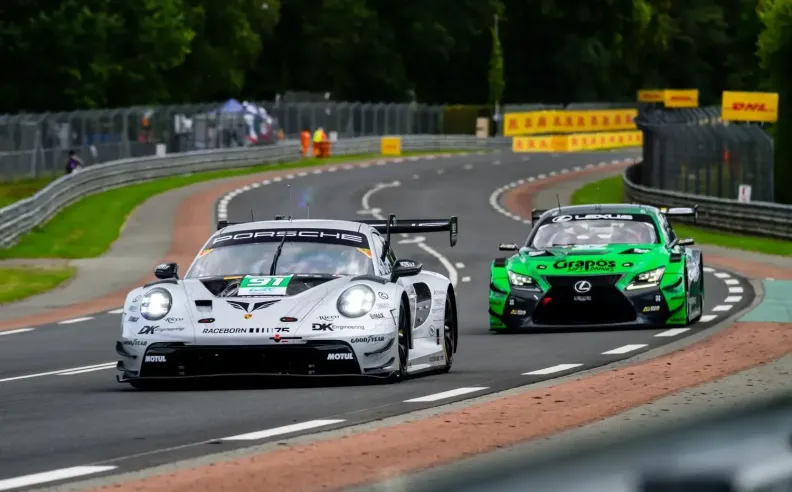
The origins of Le Mans can be traced back to Georges Durand, Charles Faroux, and Émile Coquille, who envisioned a competition that would demonstrate the durability of automobiles under demanding conditions. Although an eight hour race was initially considered, Durand proposed extending the competition to 24 hours. The inaugural event took place on May 26 and 27, 1923, with 33 cars competing at the legendary Circuit de la Sarthe in France. Unlike conventional racing events, success at Le Mans requires teams to balance outright performance with mechanical reliability, fuel consumption, tire wear, driver rotations, and carefully planned pit stops. The transition from daylight to darkness introduces additional challenges, including reduced visibility, changing track temperatures, and unpredictable weather conditions. Drivers must maintain exceptional concentration while navigating a circuit that combines permanent racing sections with public roads. Even the fastest cars can lose their advantage through excessive tire wear, mechanical failures, or poorly timed pit stops, making consistency and teamwork just as important as speed.
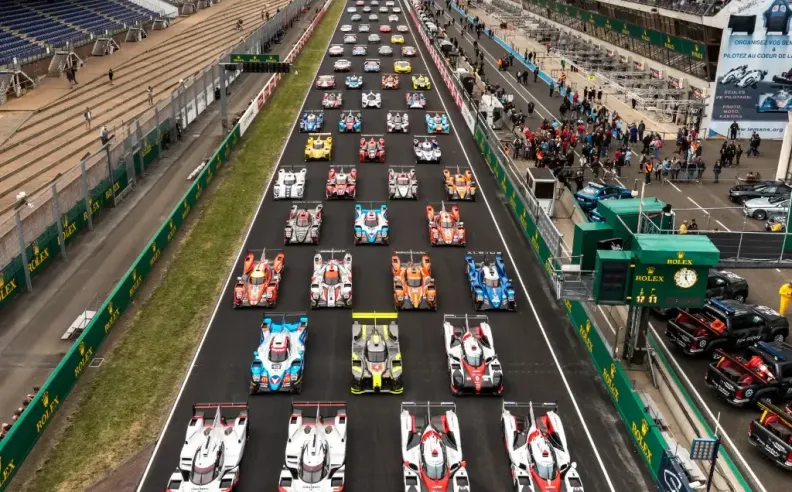
Throughout its history, Le Mans has served as a valuable testing ground for automotive manufacturers, encouraging advancements in aerodynamics, braking systems, fuel efficiency, lighting technology, and hybrid powertrains. Racing continuously for an entire day exposes mechanical components to prolonged stress, allowing engineers to evaluate their performance under demanding conditions that shorter competitions cannot fully replicate. Reducing the race duration would diminish the importance of mechanical endurance and potentially eliminate the challenges associated with nighttime driving, while extending it further would significantly increase financial, logistical, and operational demands. The traditional 24 hour format therefore offers a compelling balance between engineering challenges, sporting excitement, and spectator engagement. More than a century after its introduction, Le Mans continues to demonstrate that winning is not simply about building the fastest racing car. It is about creating a machine capable of delivering exceptional performance consistently, supported by intelligent strategies, reliable engineering, and a team prepared to overcome every challenge that an entire day of racing can deliver.

Started my career in Automotive Journalism in 2015. Even though I'm a pharmacist, hanging around cars all the time has created a passion for the automotive industry since day 1.



 SHARE